90% Less Time, 0% Compromise: How Ultrasonic Drilling Transforms Laminated Material Hole Making
 August 10, 2026 3:10 pm
In the high-stakes world of aviation manufacturing, the machining of laminated materials—consisting of carbon fiber, titanium, and aluminum—has long been a bottleneck. The extreme differences in hardness, thermal expansion, and ductility between these layers make traditional pneumatic drilling a process riddled with compromises: slow cycles, rapid tool wear, inconsistent hole quality, and high operator fatigue.
At Conprofe, we don’t accept these compromises as industry standards. Our ultrasonic drilling technology is proving that what was once a costly production barrier can be transformed into a streamlined, highly efficient operation.
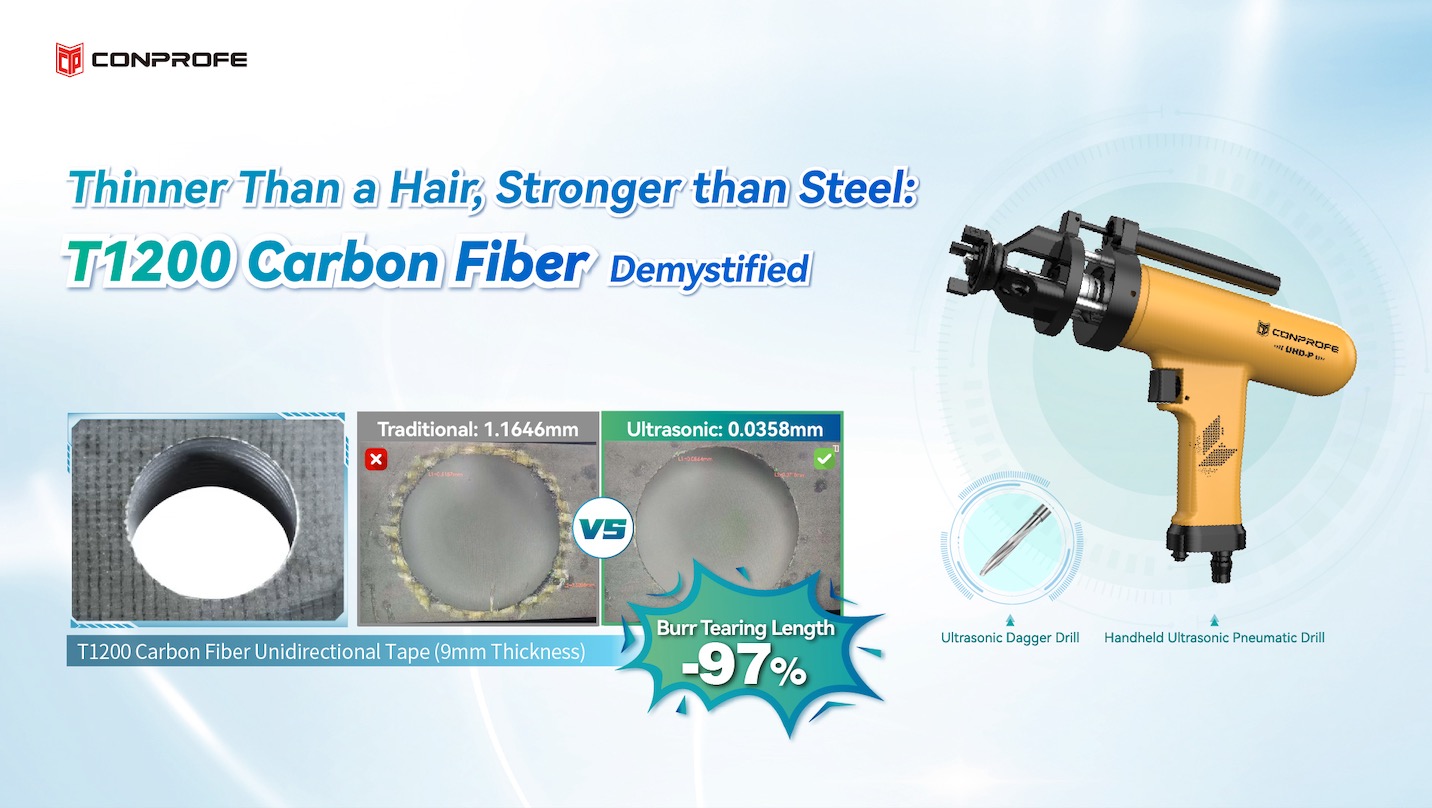
Let’s see real-world results that speak for themselves. A tool that was previously condemned to the scrap pile due to edge chipping is being revived, producing clean, burr-free holes when paired with our Handheld Ultrasonic Pneumatic Drill. Cycle times that once stretched to 50 seconds per hole are now being completed in just 5 seconds. Complex, three-step processes are being simplified into a single, precise drilling pass. This is not laboratory theory; it is the validated reality of Conprofe’s ultrasonic drilling solutions.
The Challenge: The Laminated Material Paradox
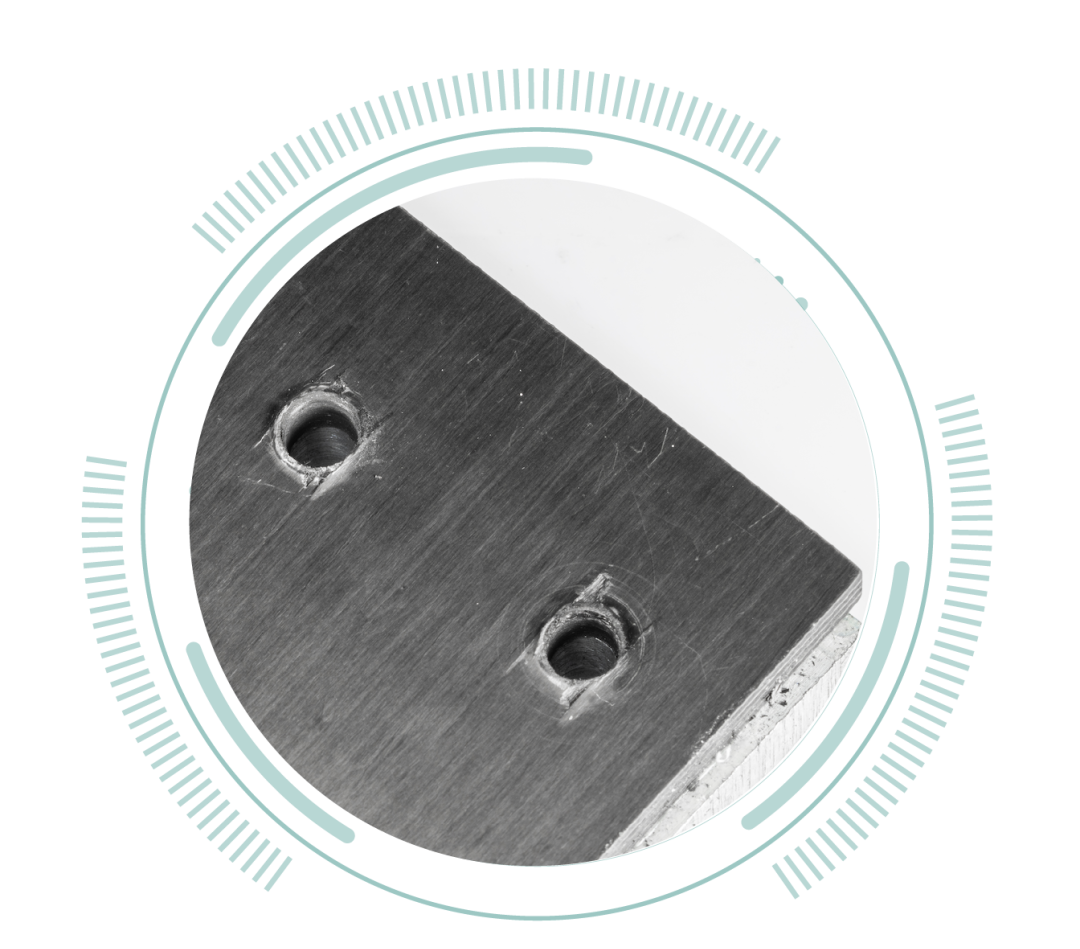
Laminated materials are engineered to combine the best properties of their constituents, but this synergy creates a machining nightmare. For instance, carbon-fiber-reinforced polymers (CFRP) are abrasive and prone to delamination, while titanium alloys are tough, have poor thermal conductivity, and are susceptible to work hardening. Using conventional pneumatic tools requires varying power and speeds across layers, often leading to interfacial burrs, poor roundness, and thermal damage like burning or smearing. The result is high scrap rates, frequent tool changes, and significant time investment.
The Solution: Conprofe Ultrasonic Integration
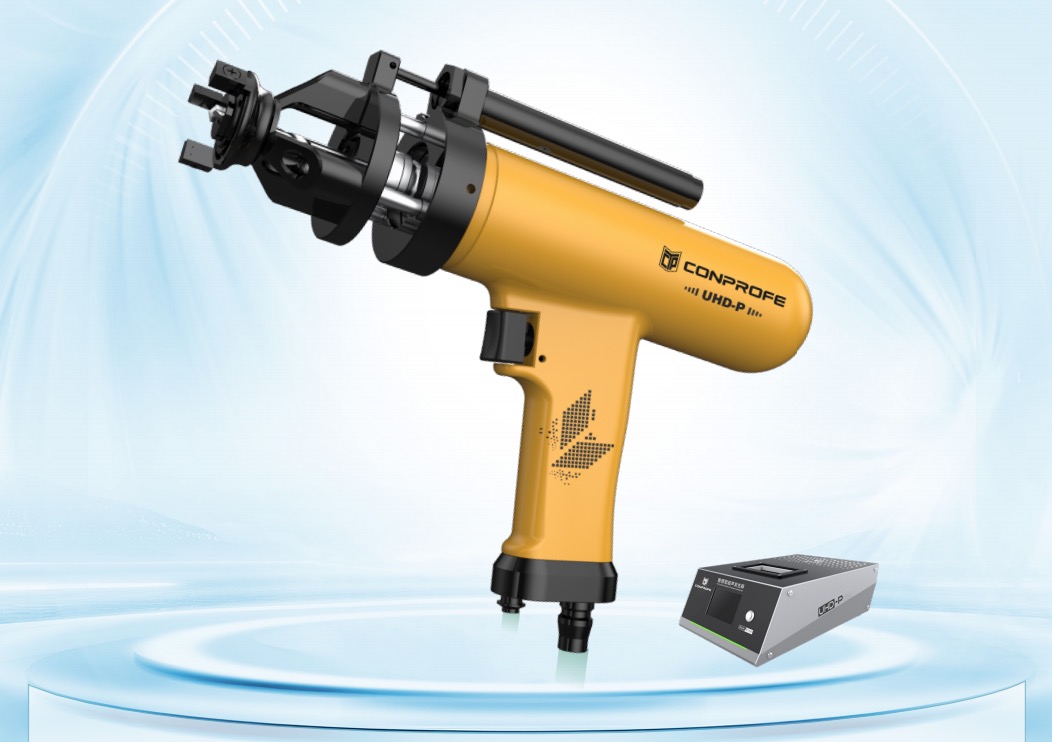
Our approach is pragmatic and proven. By integrating high-frequency ultrasonic vibration (20-40 kHz) into standard pneumatic handheld drills, we fundamentally alter the cutting mechanism. This micro-oscillation reduces friction, facilitates chip evacuation, and significantly lowers cutting forces.
We have developed a comprehensive portfolio of tools—including dagger drills, step drills, and twist drills—specifically optimized for our Handheld Ultrasonic Pneumatic Drills (Models UHD-PB45 & UHD-PC16) . This synergy delivers a holistic solution that is currently solving the toughest drilling challenges for our partners in the aviation supply chain.
Case Study 1: Ultrasonic Drilling of Carbon/Aluminum Laminates (Thickness: 8mm)
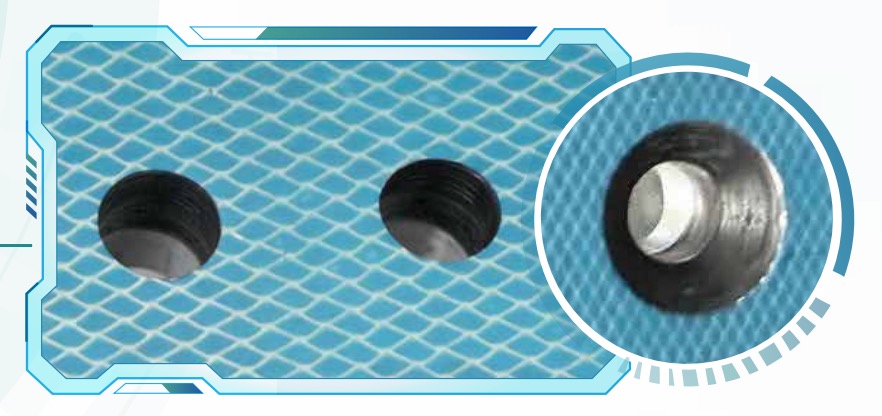
Material: Carbon fiber + Aluminum alloy plate (total laminated thickness: 8mm)
Machining Feature: Hole drilling (through-hole in laminates; countersunk hole in carbon fiber plate)
Conprofe Solution:
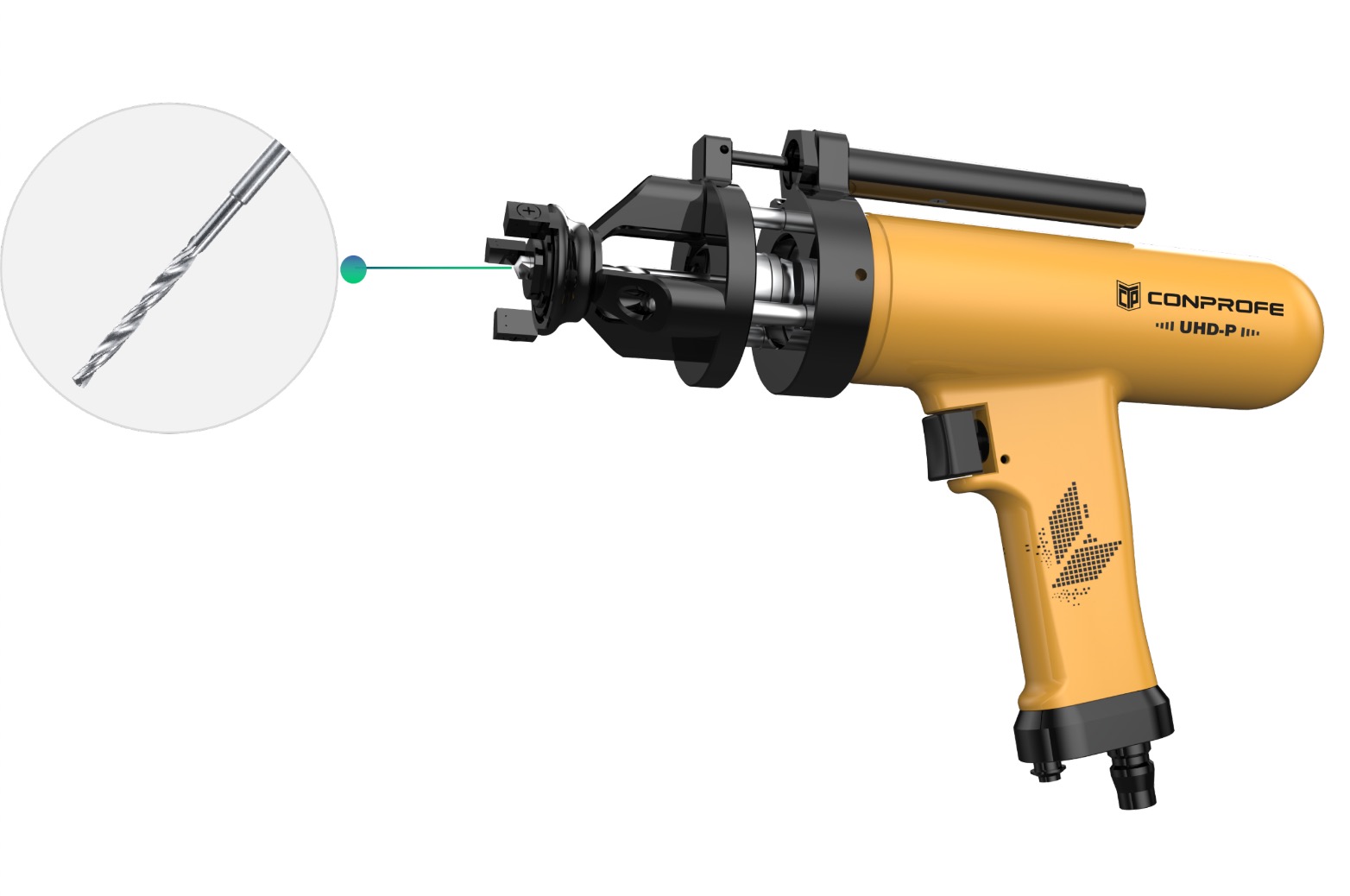
Handheld Ultrasonic Pneumatic Drill UHD-PB45 + Step Drill (Drill diameter: D6.0mm)
Conprofe Machining Advantages:
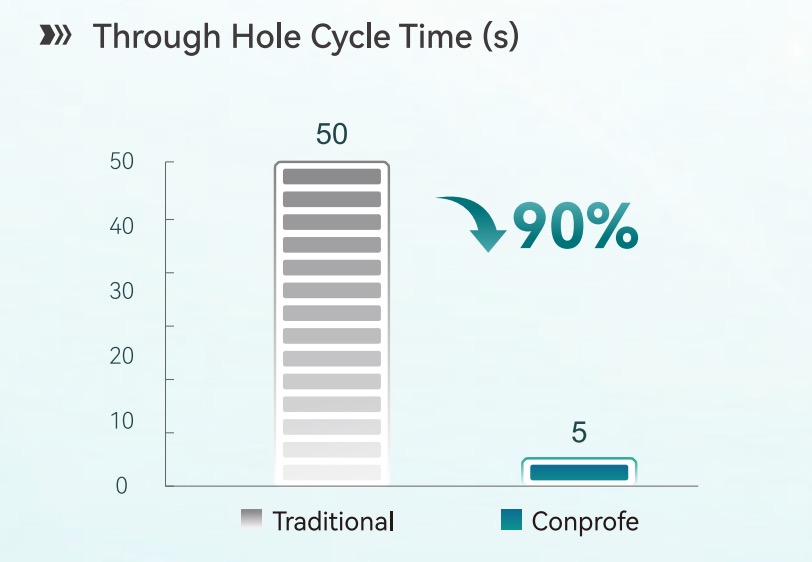
Through-hole Machining Cycle Time: One-step drilling effectively simplifies the process. The customer’s existing mass-production process achieved a cycle time of 50 seconds, while Conprofe’s ultrasonic drilling process reduced it to just 5 seconds—a 90% reduction in cycle time.
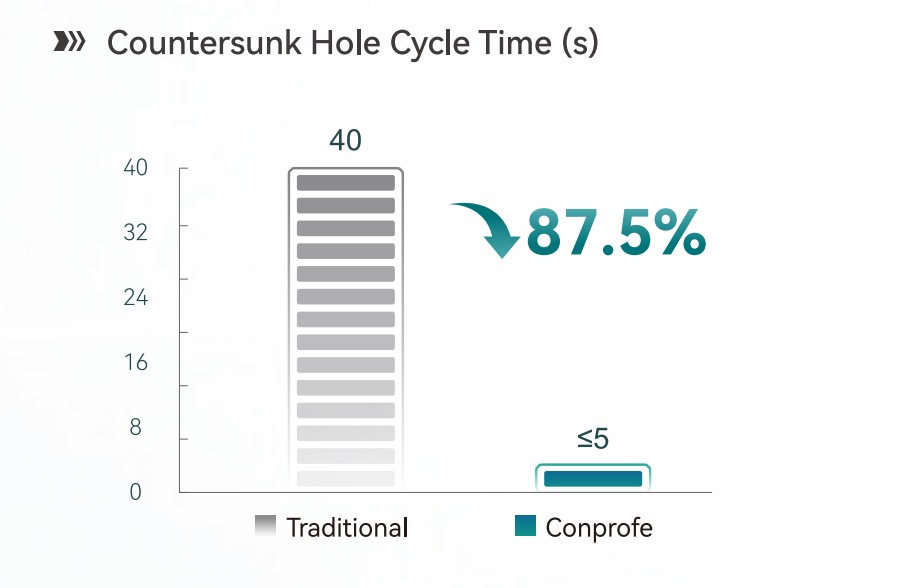
Countersunk Hole Machining Cycle Time: The customer’s existing mass-production process for carbon fiber countersunk holes achieved a cycle time of 40 seconds, while Conprofe’s ultrasonic drilling process completed the same operation in under 5 seconds—an 87.5% reduction in cycle time.
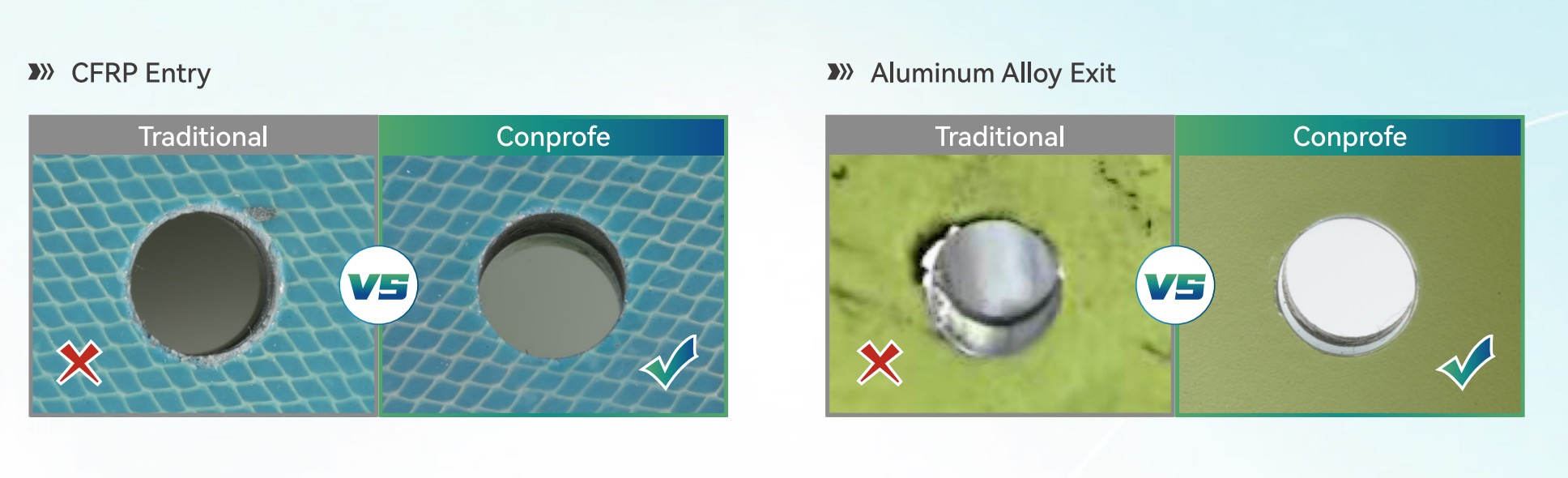
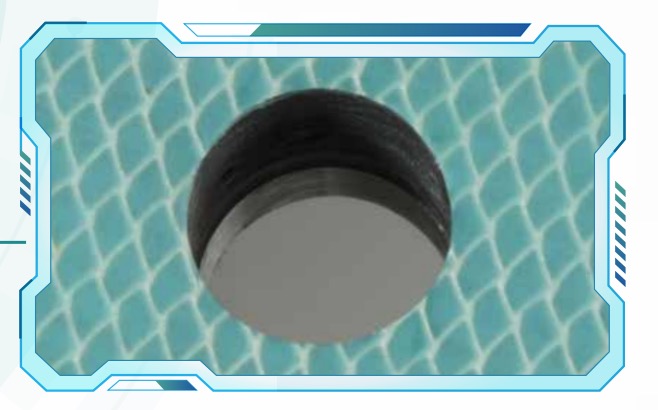
Hole Quality: Both entry and exit holes exhibited complete geometric forms with no visible burrs, delamination, or other obvious defects under visual inspection. The process significantly reduced cutting temperatures, with no burn marks on the hole walls. The workpiece surface remained cool to the touch, effectively eliminating the burn risk associated with conventional operations.
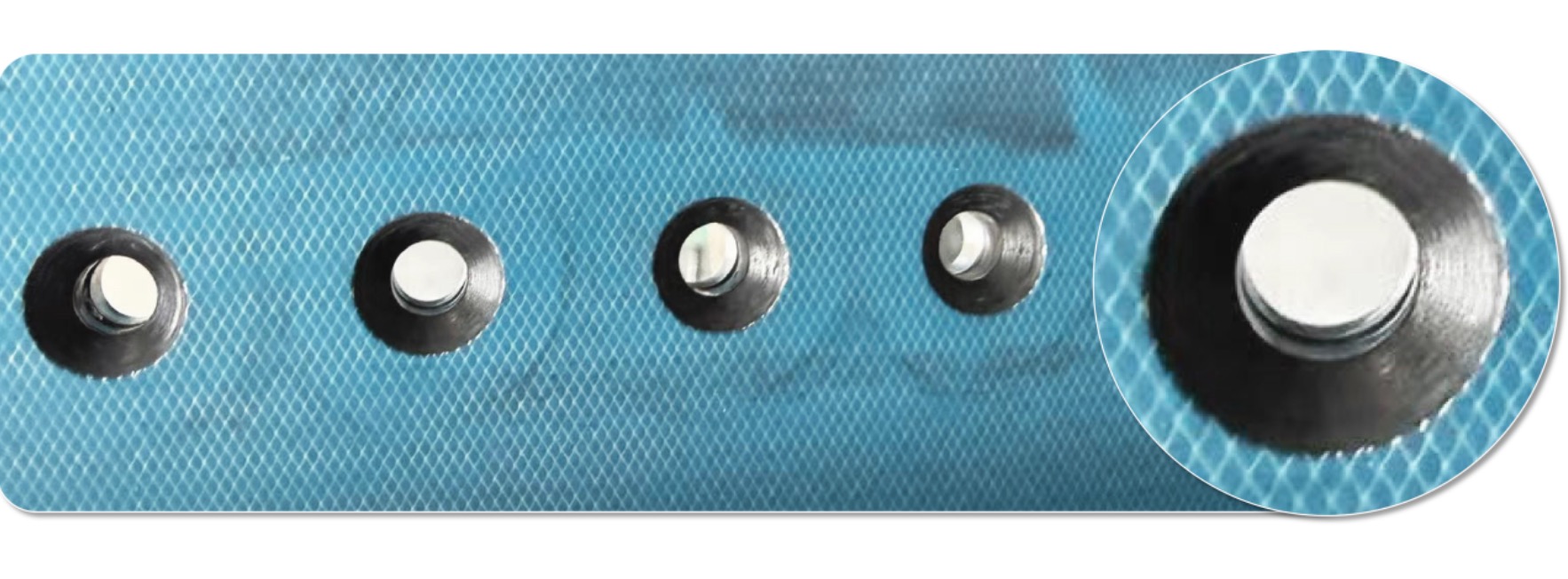
Tool Life Extension: When machining carbon fiber countersunk holes, the customer’s standard practice with conventional pneumatic drills and PCD tools was to scrap the tool as soon as any burr appeared at the hole entry. However, when these same “failed” tools were paired with Conprofe’s ultrasonic drill, they continued to produce holes with visually burr-free entries, significantly extending tool life. The combination of customer-failed tools and Conprofe’s ultrasonic drill delivered excellent results for carbon fiber countersunk hole machining.
Case Study 2: Ultrasonic Drilling of Carbon/Titanium Laminated Material (Thickness: 9mm)
Material: Carbon fiber + Titanium alloy plate (total laminated thickness: 9mm)
Machining Feature: Hole drilling
Conprofe Solution:
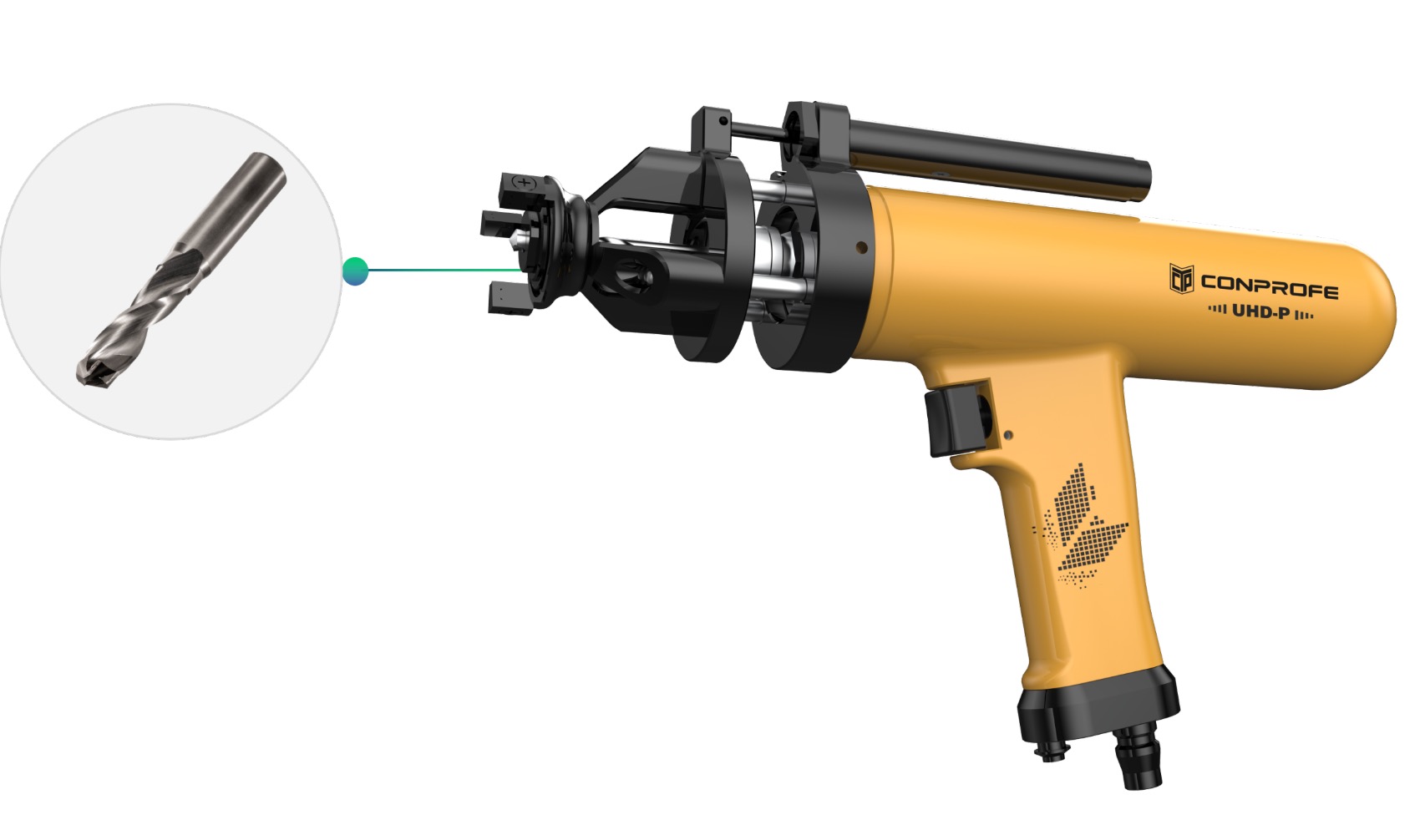
Handheld Ultrasonic Pneumatic Drill UHD-PC16 + Twist Drill (Drill diameter: D3.3mm) + Step Drill (Drill diameter: D6.0mm)
Conprofe Machining Advantages:
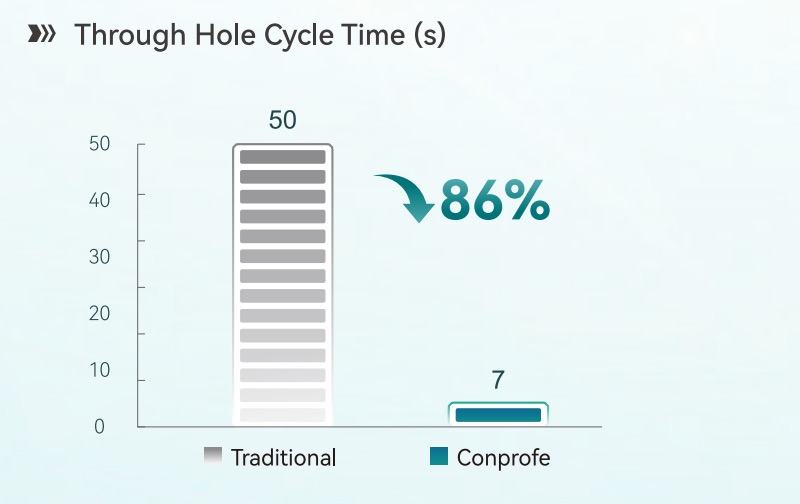
Through-hole Machining Cycle Time: The customer’s existing mass-production process achieved a cycle time of 50 seconds, while Conprofe’s ultrasonic drilling process reduced it to just 7 seconds—an 86% reduction in cycle time.
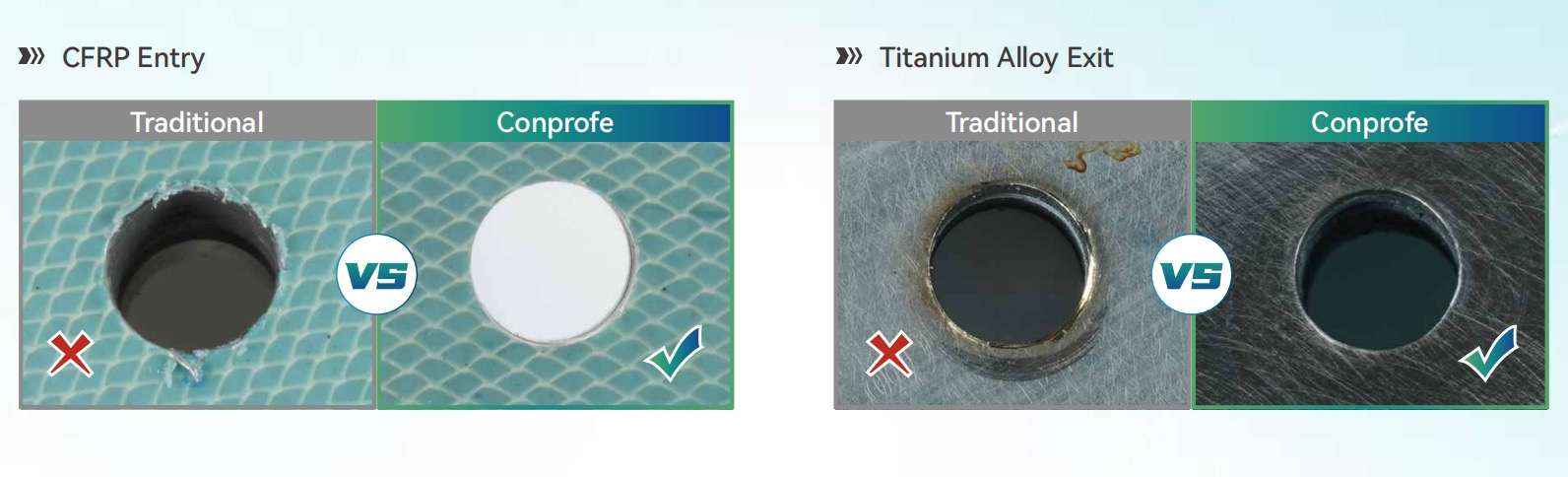
Hole Quality: Both entry and exit holes exhibited complete geometric forms with no visible burrs, delamination, or other obvious defects under visual inspection. The process significantly reduced cutting temperatures, with no burn marks on the hole walls. The workpiece surface remained cool to the touch, effectively eliminating the burn risk associated with conventional operations.
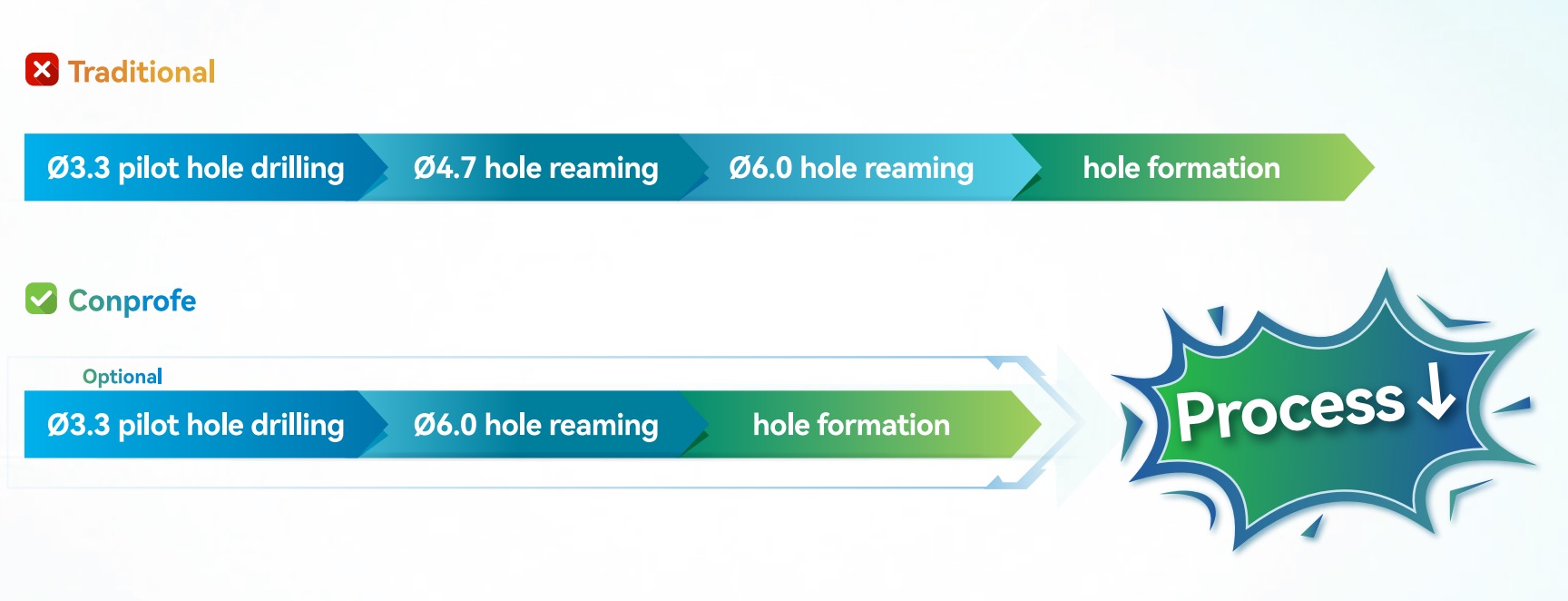
Process Simplification: One-step drilling effectively simplifies the hole-drilling process. The customer’s conventional pneumatic mass-production process required three steps: D3.3mm pilot hole → D4.7mm reaming → D6.0mm reaming. Conprofe’s ultrasonic drilling process streamlined this to just: D3.3mm pilot hole (optional; can be omitted entirely) → D6.0mm reaming.
The Verdict
As advanced materials evolve, the gap between “possible” and “profitable” widens. Conprofe’s ultrasonic drilling technology is bridging that gap. By enabling dead tools to be revived, simplifying complex operations, and ensuring “First-Time-Right” quality, we are not just solving a machining problem—we are directly enhancing our clients’ competitiveness.
We are committed to engineering practical solutions that turn production bottlenecks into performance accelerators. Let’s connect if you are looking to transform your approach to difficult-to-machine materials.