Breakthrough in EV Brake Disc Machining: 33.3% Longer Tool Life, 54% Shorter Cycle Time
 August 18, 2026 4:34 pm
As the global automotive industry accelerates its transition toward electrification and intelligent driving systems, every component under the hood—and under the wheels—is being re-evaluated for performance, weight, and durability. Among these, the brake disc (or brake rotor) stands out as a critical safety and performance component. It is the heart of any disc brake system, directly influencing stopping distance, energy regeneration efficiency, and overall vehicle safety.
For new energy vehicles (NEVs), the stakes are even higher. Range anxiety and curb weight are persistent engineering challenges, and conventional grey cast iron brake discs—while cost-effective—are increasingly struggling to meet the combined demands of thermal stability, weight reduction, and environmental sustainability. This is precisely why carbon/ceramic (C/C-SiC) composite brake discs are rapidly migrating from the high-end supercar and racing segments into the mainstream NEV market.
Why Carbon/Ceramic Composites?
C/C-SiC composites offer exceptional properties: low density for weight savings, excellent high-temperature stability, a stable friction coefficient across a wide temperature range, and outstanding wear resistance. These characteristics are ideally suited for regenerative braking systems in hybrids and battery electric vehicles, where thermal loads can fluctuate significantly. However, the same properties that make C/C-SiC so attractive on the road also make it notoriously difficult to machine on the shop floor.
Conventional machining methods often result in edge chipping at hole exits and entrances—a critical defect for brake discs, where even minor edge irregularities can compromise braking safety and long-term durability. Beyond quality issues, traditional processing also suffers from rapid tool wear, prohibitively high production costs, and unacceptably low throughput. These bottlenecks have historically constrained the large-scale adoption of C/C-SiC brake discs in high-volume NEV production.
The Ultrasonic Solution: A Systematic Approach
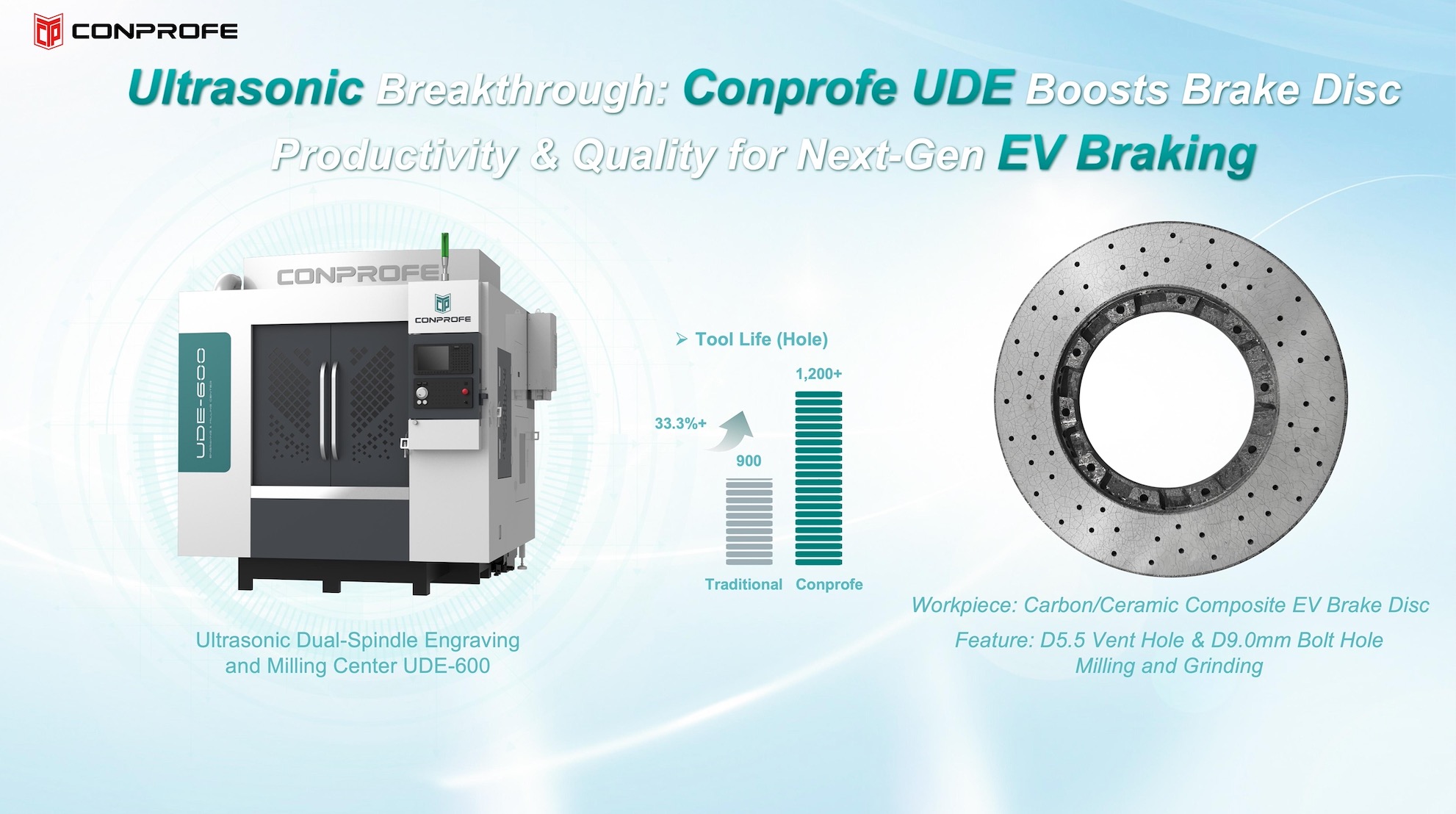
To address these challenges head-on, Conprofe has developed a dedicated ultrasonic high-efficiency machining solution specifically tailored for NEV brake disc applications. This system integrates our independently developed ultrasonic technology with a dual-spindle machining center to deliver a step-change in process capability.
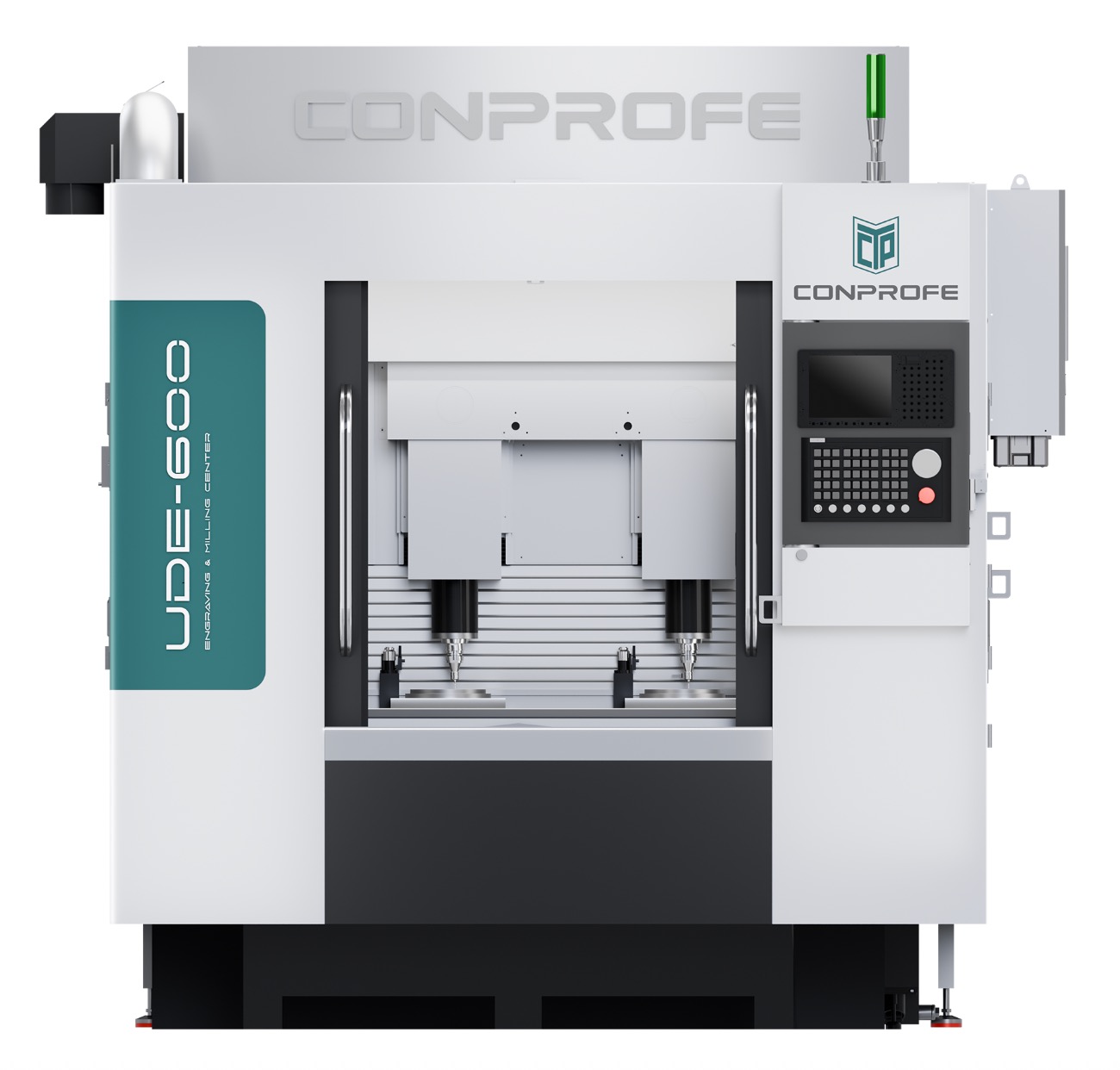
At the core of this solution is the Conprofe UDE-600 Ultrasonic Dual-Spindle Engraving and Milling Center. This machine features two independently controlled ultrasonic spindles, each capable of reaching up to 30,000rpm. The independent control allows for simultaneous machining of two parts in a single setup, effectively doubling throughput without compromising accuracy. With X/Y/Z positioning accuracy of ±0.006mm and repeatability of ±0.004mm, the system is equally suited for deep micro-hole drilling and high-precision contouring in composites, hard-brittle materials, metals, and engineering plastics.
Key design features include fully sealed, servo-driven tool magazines for consistent and reliable tool changes; multi-layered labyrinth seals on guideways and ball screws to protect against abrasive composite dust; and a compact, rear-mounted coolant tank that optimizes floor space while maintaining system rigidity.
Real-World Validation: Production Test Data
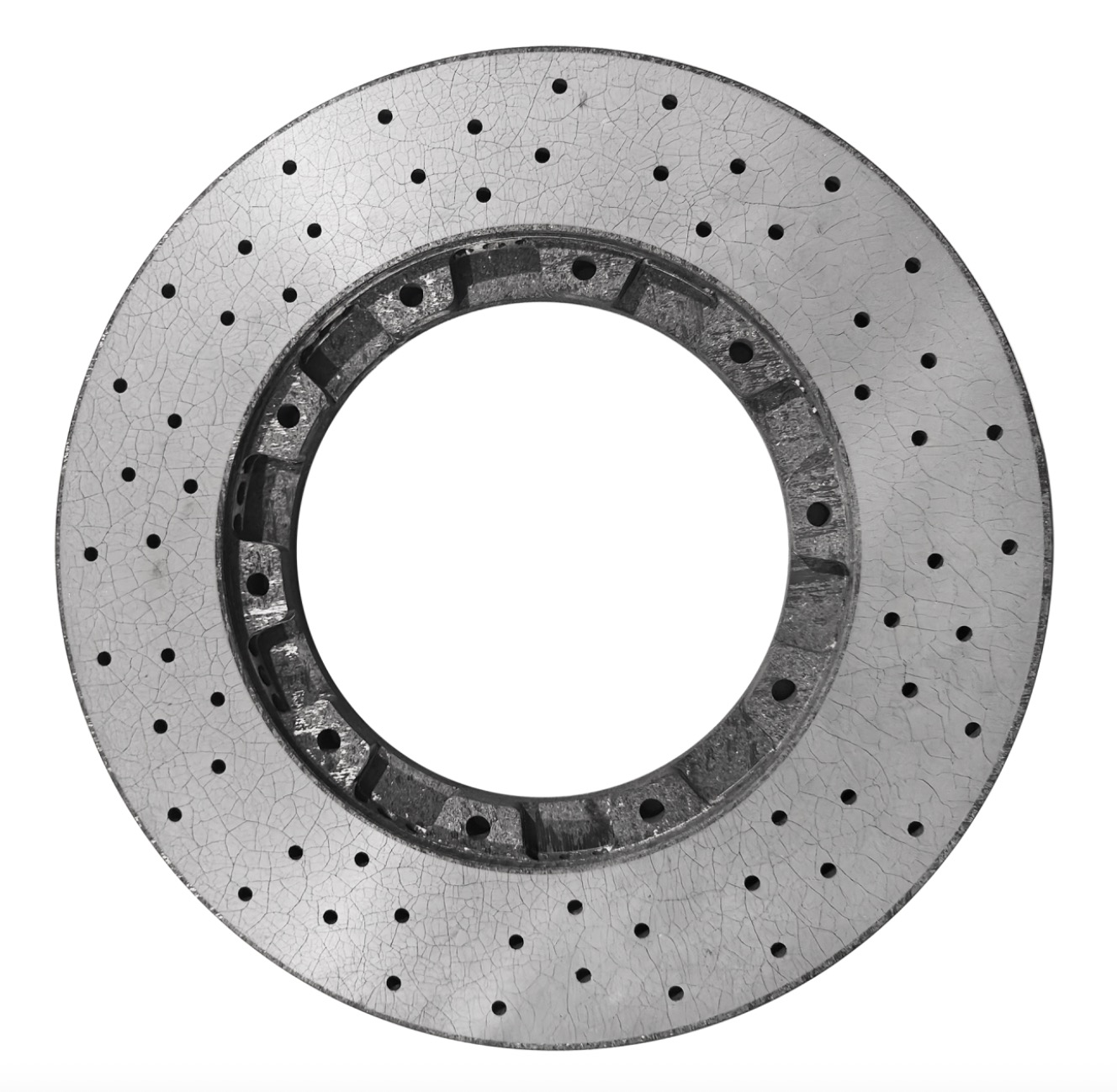
The true test of any machining solution lies in production data. Conprofe recently conducted a comprehensive machining trial on a C/C-SiC brake disc (368mm diameter × 32mm thickness) for a leading NEV manufacturer. The test covered three critical operations: hard-layer grinding for vent holes (D5.5mm), composite-layer milling for the same vent holes, and bolt-hole milling (D9.0mm).
Vent holes deserve special attention. They are numerous, time-consuming to produce, and highly susceptible to edge chipping. Because tools must run continuously for extended periods, any improvement in this operation has an outsized impact on overall productivity and cost.
The measured results demonstrated a clear and consistent advantage across all key performance indicators:
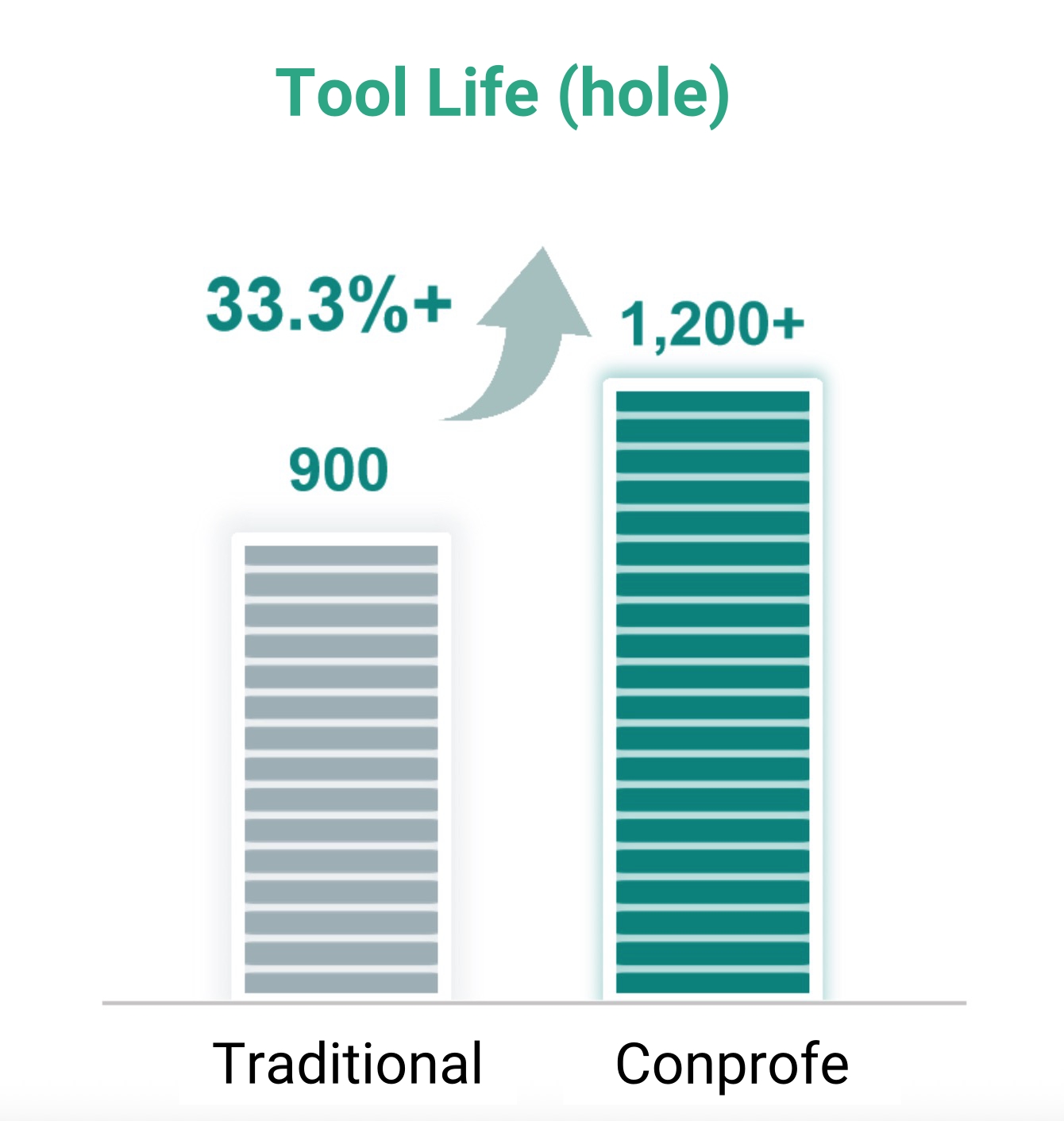
For the D5.5mm vent holes, tool life increased from 900 holes to over 1,200 holes, representing a 33.3% improvement.
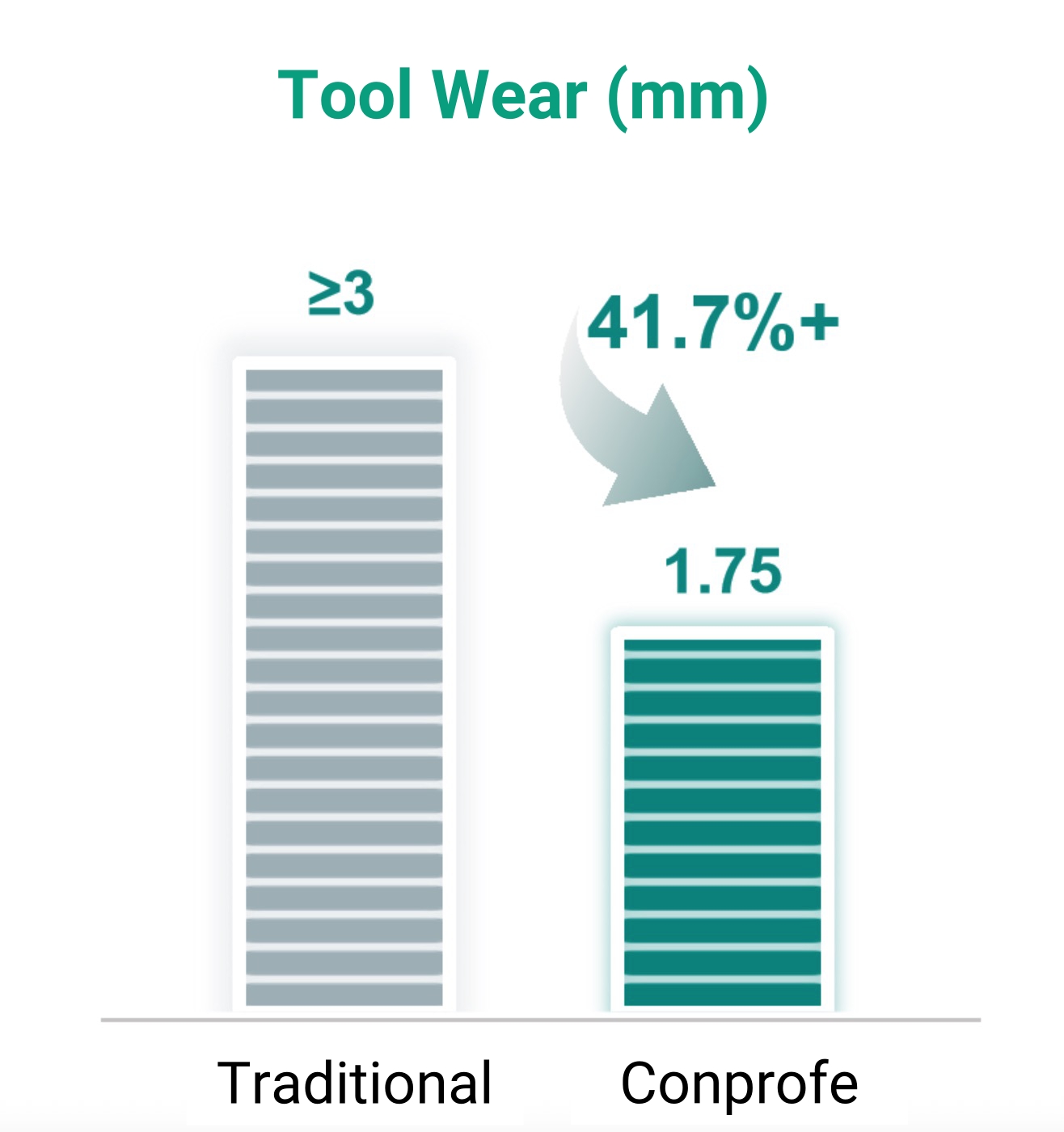
After processing 900 holes, the conventional process had worn the tool beyond 3.0mm, effectively scrapping it, while the Conprofe ultrasonic solution showed only 1.75mm of wear—a reduction of more than 41.7%.
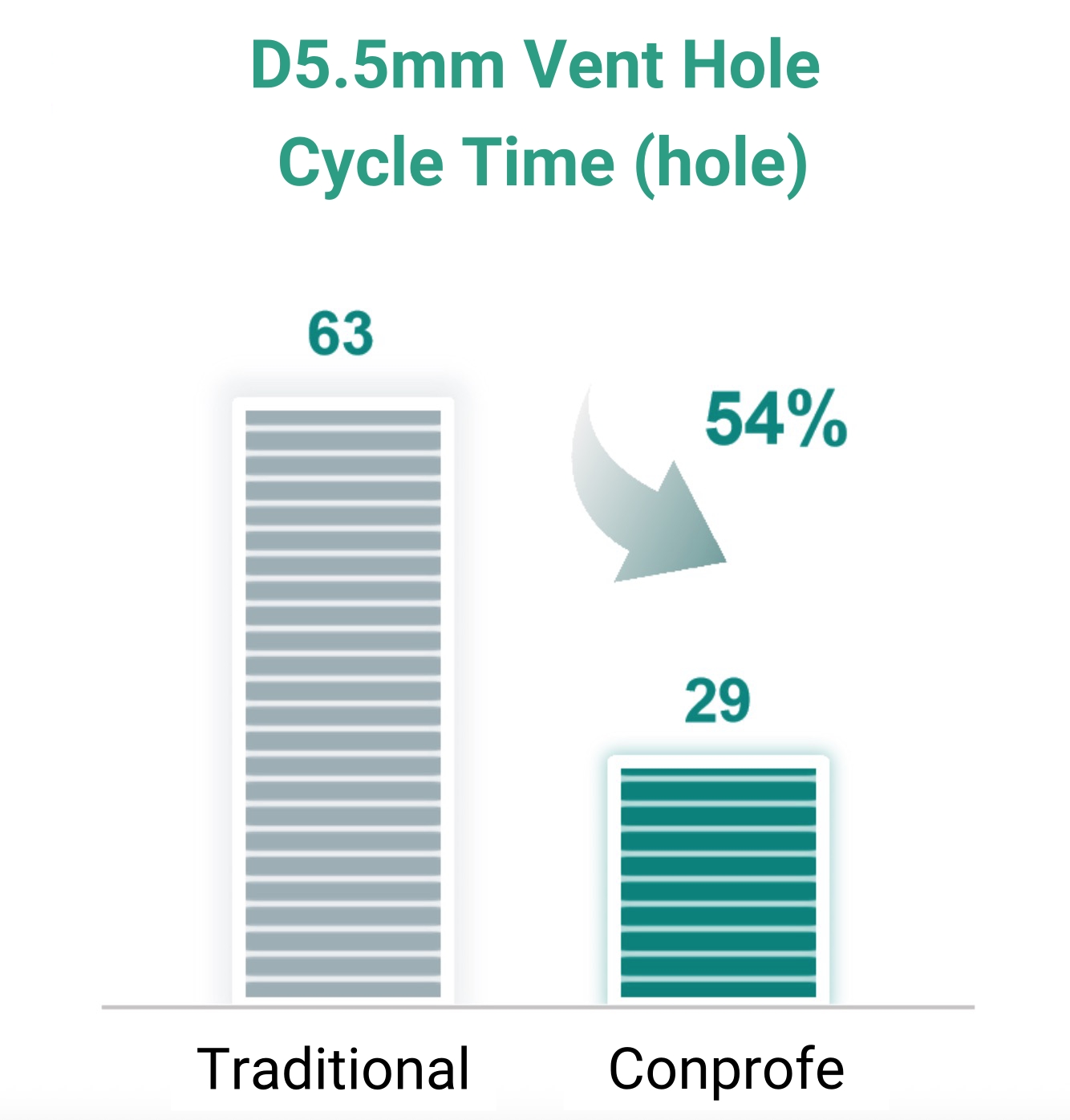
Cycle time per hole was cut from over 63 seconds to just 29 seconds, a 54% reduction.
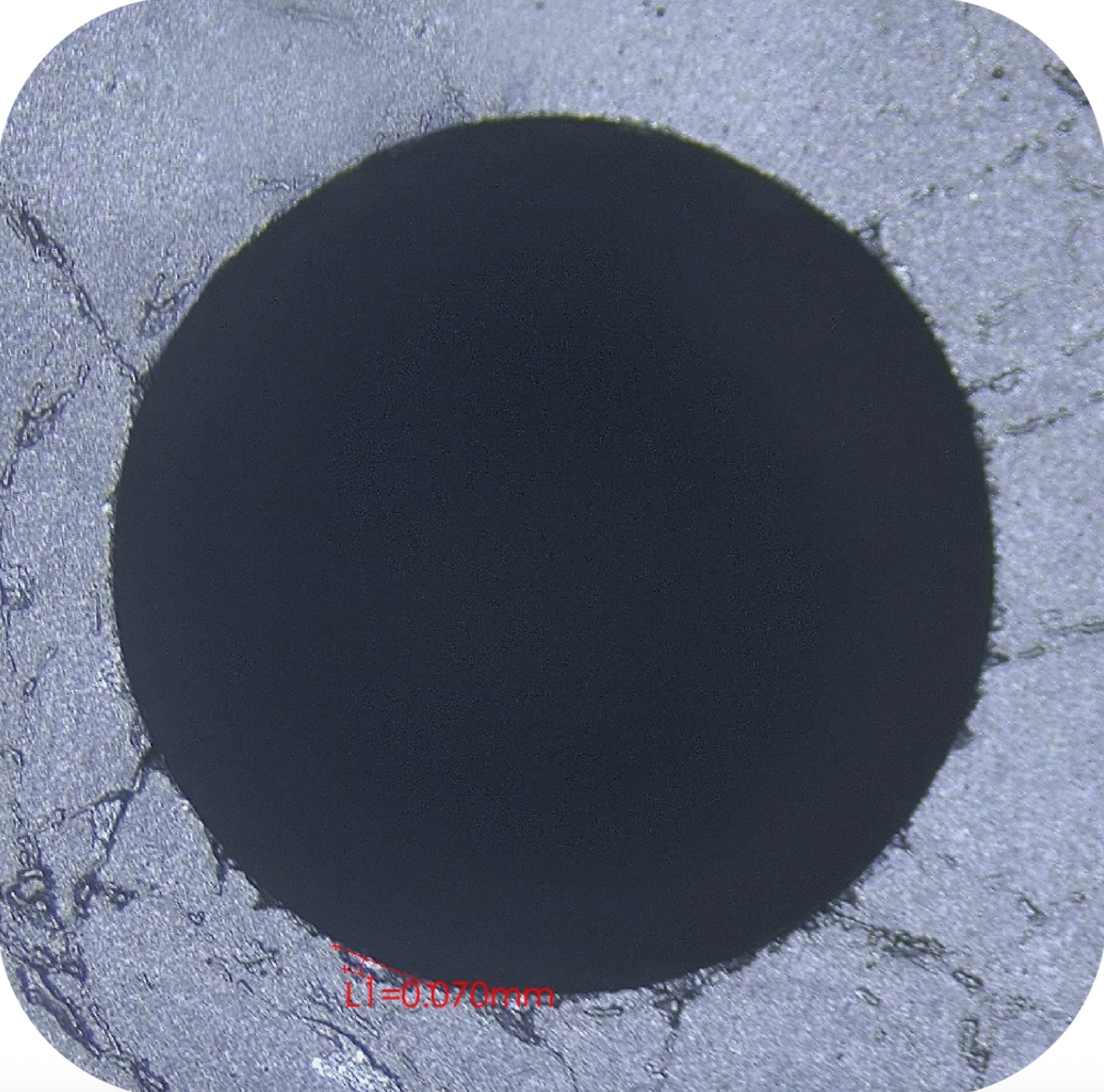
Critically, edge chipping was consistently held at or below 0.07mm, well within the customer’s target of 0.1mm, and visually imperceptible.
These results represent multiple breakthroughs: reduced edge chipping, extended tool life, and significantly higher processing efficiency. The ultrasonic assistance effectively reduces cutting forces, suppresses vibration, and improves chip evacuation, which collectively translate into better surface integrity and a more stable, predictable process.
Looking Ahead
With the NEV market continuing its rapid expansion, the adoption of C/C-SiC brake discs is set to grow substantially. However, achieving scale without sacrificing quality or cost-efficiency requires more than just advanced materials—it demands equally advanced manufacturing technologies.
At Conprofe, we remain committed to pushing the boundaries of ultrasonic CNC machine tool development. By working closely with partners across the automotive supply chain, we aim to contribute tangible solutions that enable higher-quality, lower-cost, and more sustainable production of next-generation brake systems.
We invite you to connect with us if you are exploring efficient, reliable machining strategies for composites or other difficult-to-cut materials. Let’s discuss how our ultrasonic solutions can support your production goals.