Measured Results, Real Gains: 50% Better Surface Quality and 31.2% Faster Cycle Time in Liquid Cold Plate Machining
 October 26, 2026 3:30 pm
The explosive growth of AI compute demand continues to push chip power consumption upward. A new generation of AI-CPU and AI-GPU compute chips has reached a single-chip thermal design power (TDP) of 1,400W, approaching the practical limits of conventional air-cooling technology. Liquid cooling has therefore become the core thermal management solution for intelligent computing data centers.
Industry sources forecast that the global liquid-cooling market for intelligent computing data centers will reach RMB 114.7 billion in 2026, a year-on-year increase of 273%. Driven by chip power consumption, liquid cooling is shifting from an “optional” to a “mandatory” choice.
As the core component that directly contacts the chip surface to conduct heat, the cold plate’s micro-channel structure is a key technical path for breaking through the high-heat-flux thermal bottleneck of AI computing. The dimensional accuracy and inner-wall surface quality of the micro-channels directly determine the cold plate’s heat dissipation performance and service life—placing extremely high demands on both machining equipment and process.
Oxygen-Free Copper: The Preferred Material for High-Compute Chip Cold Plates

Material selection is equally critical to cold plate thermal efficiency. Oxygen-free copper (with extremely low oxygen content and purity ≥99.9%) offers a high thermal conductivity of 385–400 W/(m·K), effectively reducing conduction thermal resistance. Its good corrosion resistance ensures long-term operational stability, while its excellent ductility and machinability meet the manufacturing requirements of precise micro-channel structures. This balanced combination of properties makes it a preferred material for liquid-cooling components in the AI compute era.
Why Is Oxygen-Free Copper Difficult to Machine?
Despite its excellent properties, oxygen-free copper is challenging to machine:
Soft material, prone to tool sticking: Its excellent plasticity makes built-up edge formation highly likely during machining.
Difficult chip breaking: Tangled chips can easily scratch precision part surfaces.
High precision requirements: cold plates demand extremely high dimensional accuracy and surface quality.
Conventional machining approaches struggle to simultaneously achieve precision, surface quality, and production efficiency. Conprofe’s Ultrasonic-Green CNC Machine Tools integrate ultrasonic machining technology with high-performance cutting tools, effectively resolving the challenges of tool sticking, poor chip evacuation, and chatter marks in oxygen-free copper machining—helping manufacturers break through process bottlenecks and achieve higher quality, lower cost, and greater efficiency.
Conprofe Ultrasonic-Green Machine Tools: Improving Quality and Efficiency in CPU/GPU Micro-Channel Cold Plate Machining
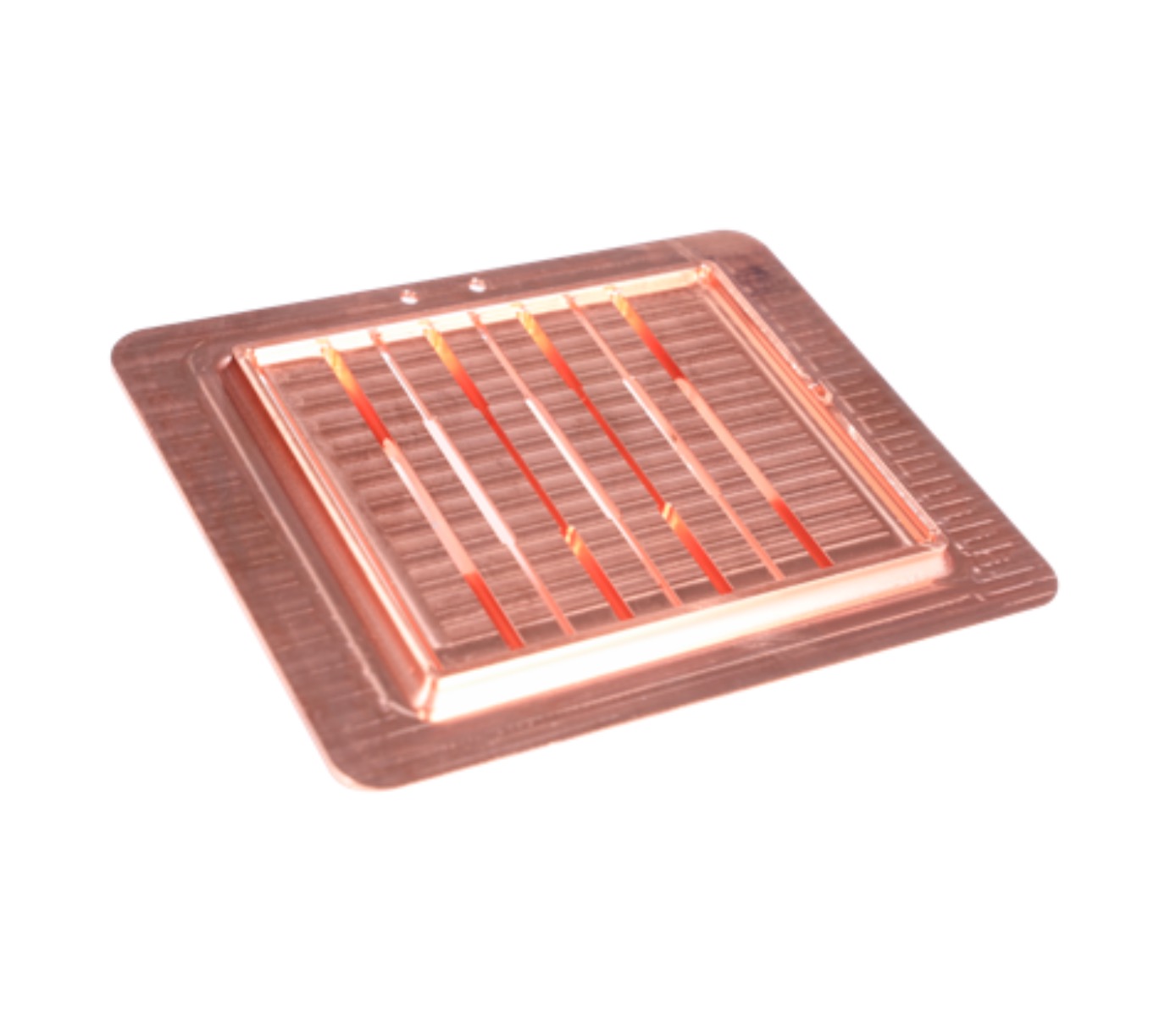
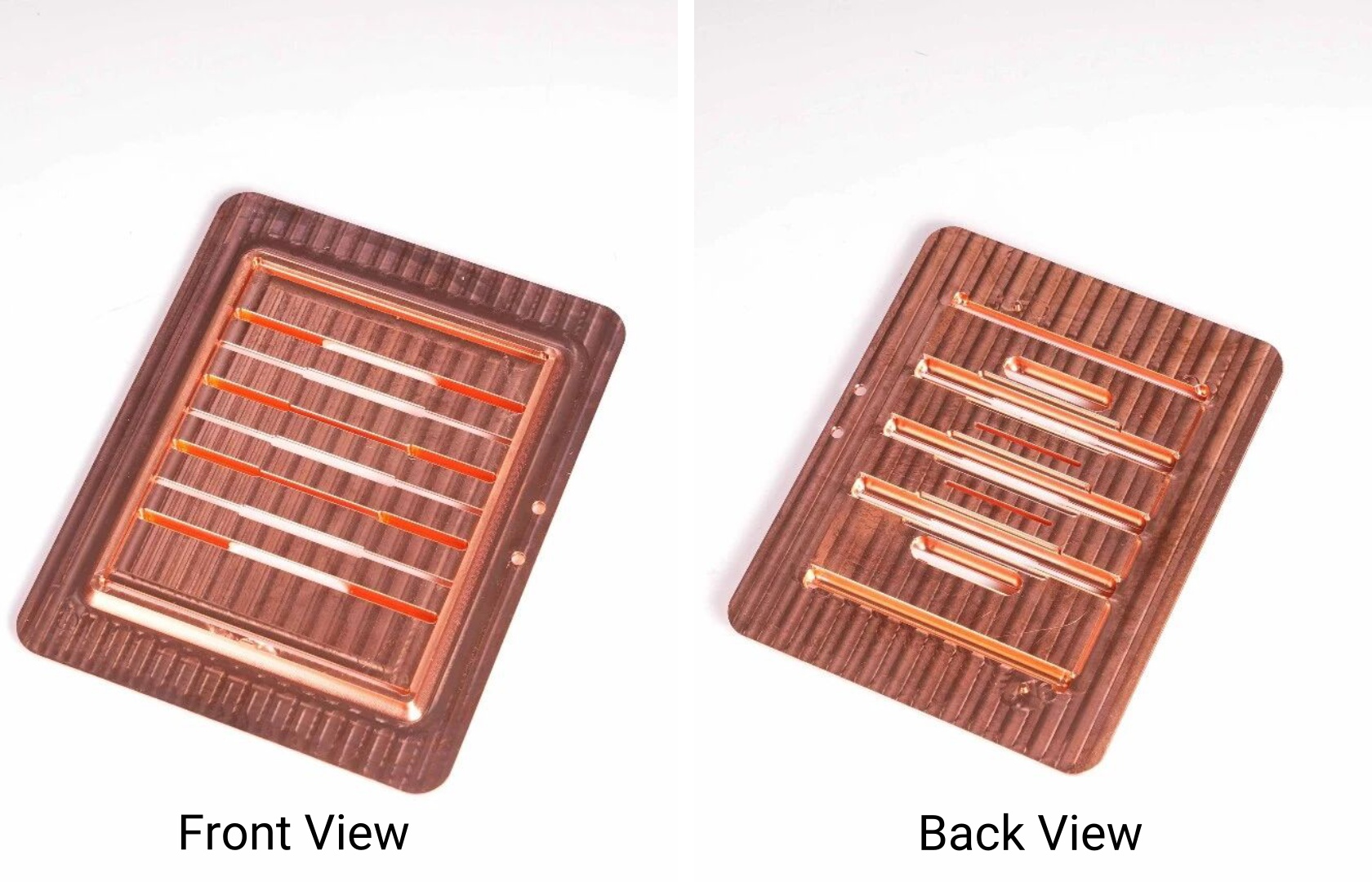
Workpiece Information
Material: C1020 copper (oxygen-free copper)
Part: AI CPU/GPU micro-channel liquid cold plate
Features: Surface groove/cavity milling, precision micro-hole drilling
Dimensions: 95.8x77.3x7mm
Conprofe Solution
To address the machining challenges of oxygen-free copper micro-channel cold plates, Conprofe combines its Ultrasonic-Green Drilling & Milling Center UDT-500, Ultrasonic-Green Engraving & Milling Center ULW-400, ultrasonic machining technology, and high-performance cutting tools to overcome the difficulties of machining high-plasticity copper materials.
Core Product: Ultrasonic-Green Drilling & Milling Center UDT-500
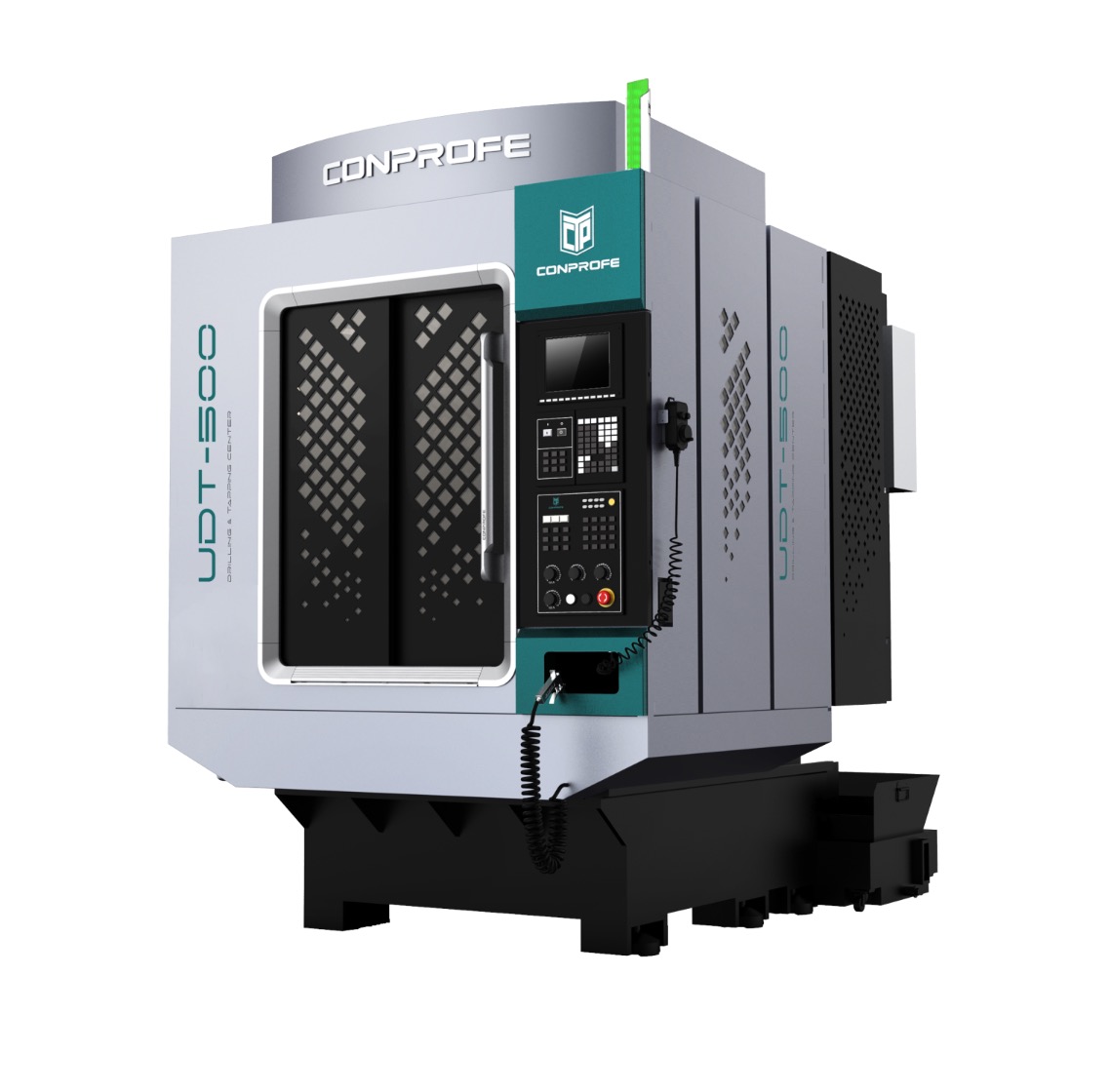
Highlights: Ultrasonic spindle with a maximum speed of 30,000 rpm; labyrinth structure with three-layer protection; 36-tool magazine capacity; special anti-rust treatment.
Applications: Integrated drilling, tapping, and milling for small plate parts, disc-shaped parts, and housing parts in semiconductors, aviation, medical, consumer electronics, automotive, and other industries.
Ultrasonic-Green Engraving & Milling Center ULW-400
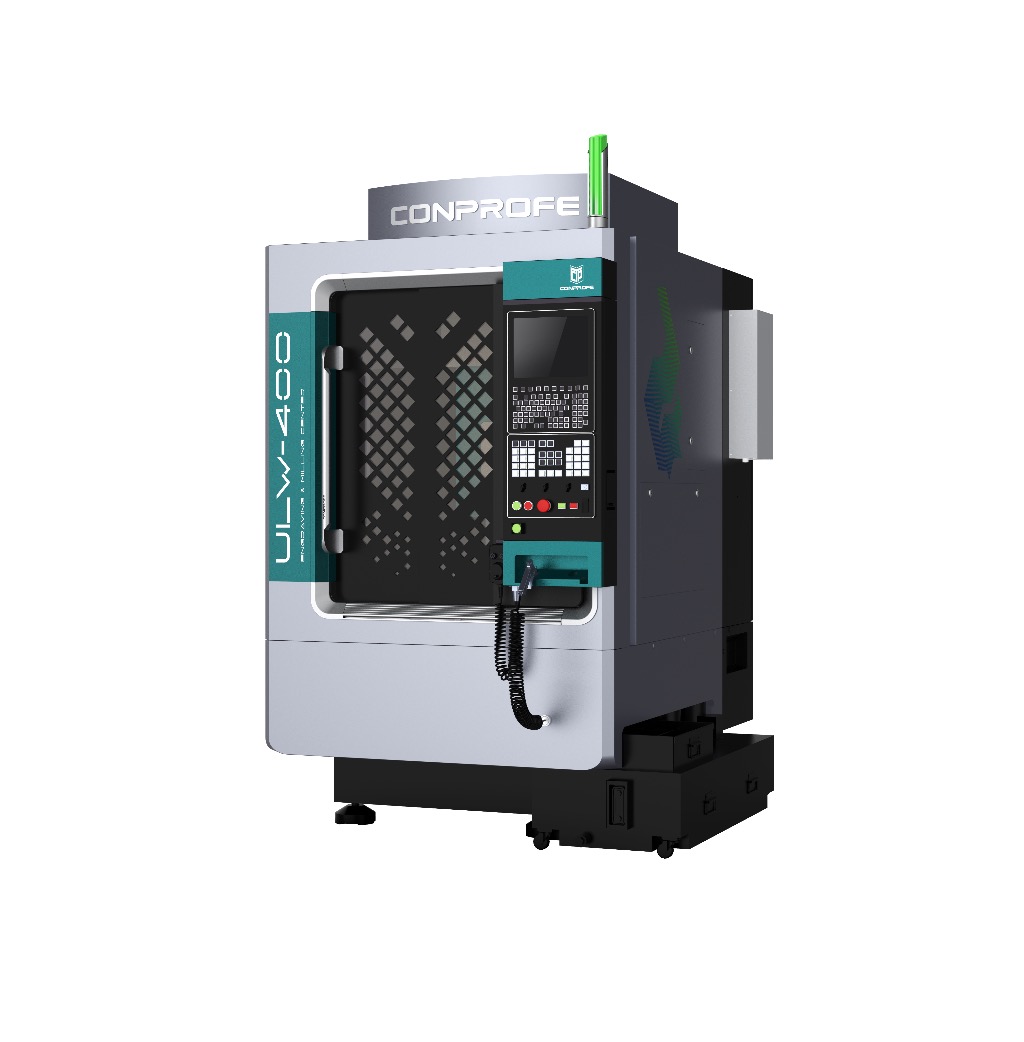
Highlights: Equipped with Conprofe’s proprietary intelligent ultrasonic machining technology; labyrinth structure with three-layer protection; standard linear encoder for full closed-loop control; in-process measurement capability with a high-precision probe.
Applications: Multi-purpose machining for precision components made of hard and brittle materials (e.g., ceramics, sapphire, glass, silicon carbide), composites (e.g., carbon fiber), and difficult-to-machine metals (e.g., titanium alloys, superalloys); Particularly advantageous in micro-hole and small precision part machining.
Machining Advantages
Ultra-high precision: D0.9mm micro-tools enable micron-level machining accuracy, suitable for forming complex precision structures.
Excellent surface quality: High spindle speed, high feed rates, and finishing processes effectively improve machining efficiency and reduce tool chatter marks, ensuring workpiece surface finish.
Measured Data Comparison
Surface roughness: Under the customer’s conventional process, average workpiece roughness was Ra 0.268 μm; with Conprofe’s ultrasonic solution, average roughness was Ra 0.133 μm—a 50% reduction. Smoother cold plate channel walls reduce fluid resistance, enable more complete chip heat exchange, and help prevent scaling.
Flatness: Under the conventional process, workpiece flatness was 0.03 mm; with Conprofe’s ultrasonic solution, flatness was 0.027 mm—a 10% reduction in tolerance value. This not only meets the drawing requirement (0.05 mm) but achieves higher precision, enabling better contact between the cold plate and chip, reducing thermal resistance, and improving heat conduction.
Cycle time: Conventional process: 2,891 seconds (48 min 11 s); Conprofe ultrasonic solution: 1,989 seconds (33 min 9 s)—a 31.2% reduction in cycle time.
Conclusion
Conprofe’s Ultrasonic-Green CNC Machine Tools deeply integrate ultrasonic technology with precision machining, providing a reliable solution for the efficient, high-quality machining of key AI CPU/GPU liquid cold plate components. The solution not only optimizes key metrics such as surface roughness and flatness—improving chip operational stability and extending chip service life—but also significantly reduces per-workpiece cycle time, unlocking greater capacity while maintaining product yield and precision.
As the liquid-cooling market enters a period of rapid growth, Conprofe will continue to advance innovative machining technologies in support of the new era of AI CPU/GPU liquid cooling.