Conprofe Insight: World Environment Day 2026 – Why “Beat the Clock for Climate” Matters for Every Manufacturer
 June 5, 2026 1:45 pm
World Environment Day, established by the UN General Assembly in 1972 following the Stockholm Conference on the Human Environment, is observed annually on June 5. For 2026, the global theme is “Inspired by Nature. For Climate. For Our Future”, underscoring the urgent need for climate action. In mainland China, the theme is “Comprehensive Green Transition, Building a Beautiful China” – a clear signal that environmental responsibility is no longer a corporate optional but a competitive necessity.
The Challenge: Traditional CNC Machining and the Necessity for Cleaner Production
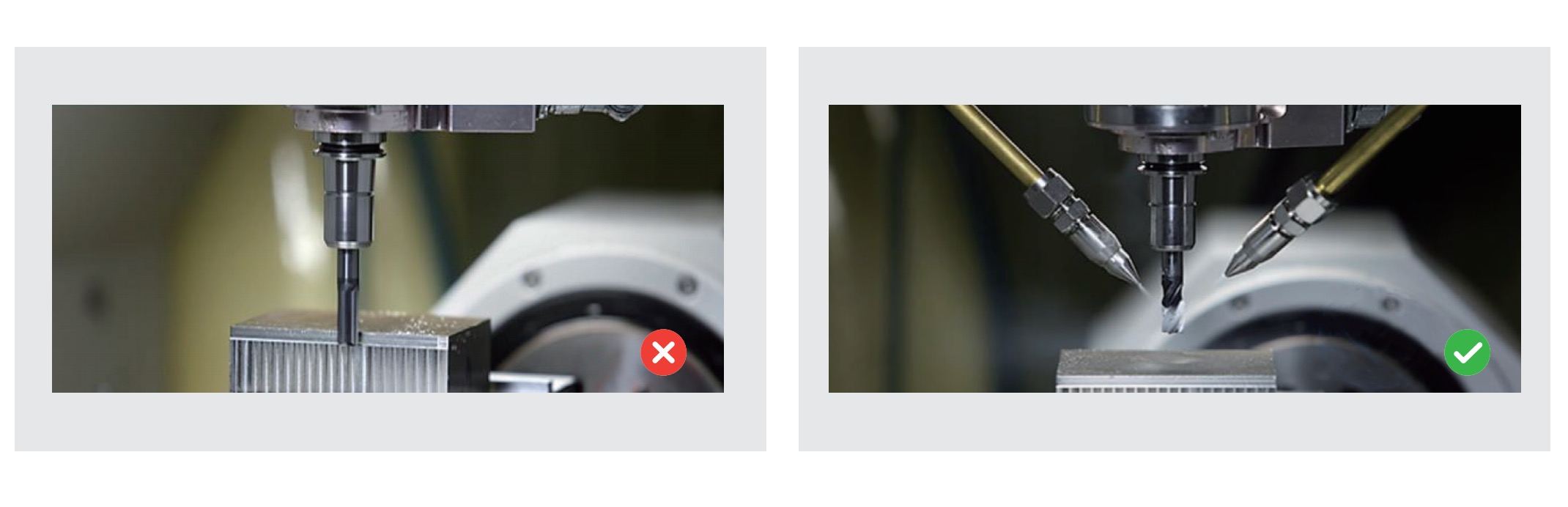
Conventional CNC machining, particularly using traditional cutting oils and flood cooling, presents significant environmental and operational challenges. These include aerosolized oil mist (hazardous to respiratory health), messy work environments, high fluid disposal costs, and thermal damage to both tools and workpieces. As advanced manufacturing technologies evolve – with new materials, higher cutting speeds, and stringent tool life requirements – the industry faces a clear inflection point. Cleaner production and green manufacturing are no longer niche concepts; they are the new baseline for efficiency.
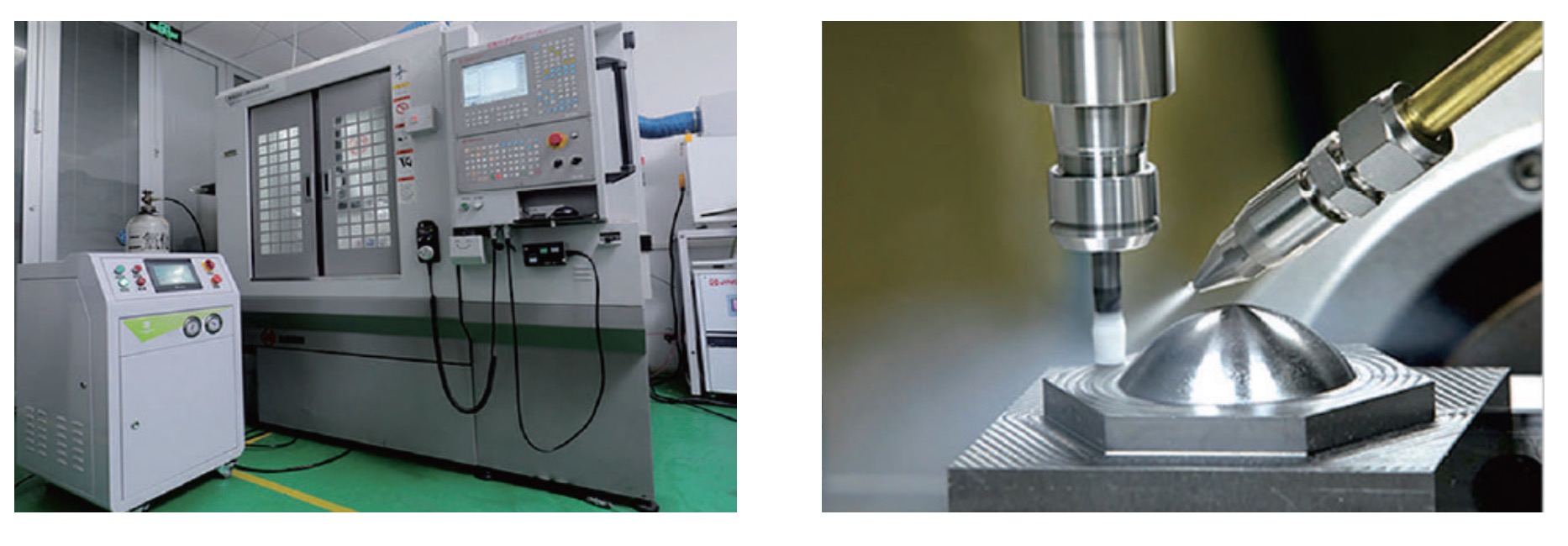
Recognizing this, Conprofe has leveraged over a decade of experience in metal cutting and tooling R&D, production, and sales. We have developed an integrated Green Machining Solution that combines high-performance tool design, efficient cutting processes, and optimized tool selection strategies. Our goal is straightforward: enable cleaner production while reducing costs and improving throughput for difficult-to-machine materials.
The Conprofe MUSCLE Framework – Five Core Technologies
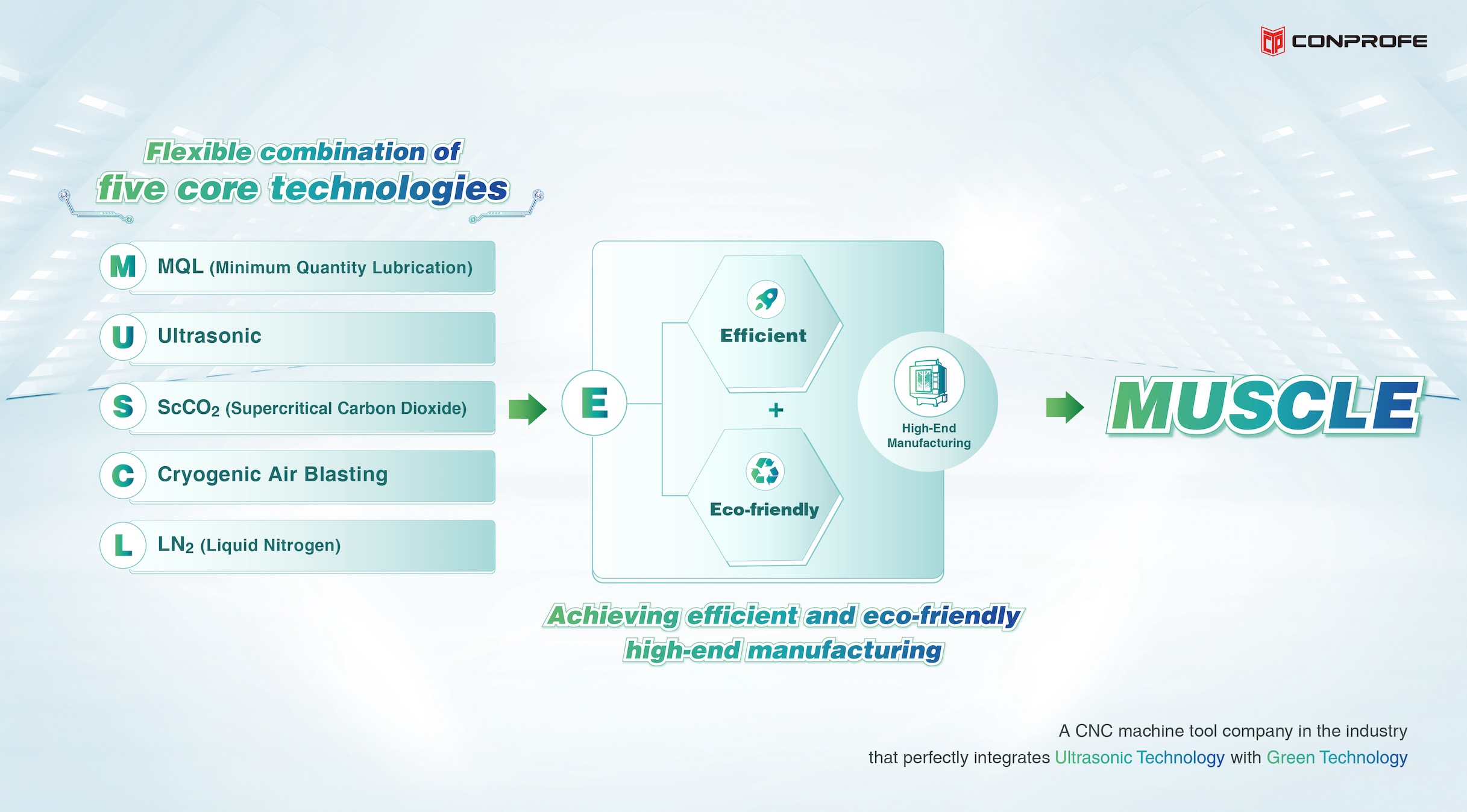
At the heart of our approach is the MUSCLE technology architecture—a modular, scalable suite that integrates green cooling, lubrication, and ultrasonic machining technologies:
M – Minimum Quantity Lubrication (MQL) – Delivers micro-aerosols of lubricant directly to the cutting edge, dramatically reducing fluid use.
U – Ultrasonic Machining – Reduces cutting forces and improves tool life through high-frequency vibration.
S – Supercritical CO2 Cooling – Injects supercritical CO2, which expands into a -78°C dry ice/gas mixture, providing intense cooling without liquid mess.
C – Cryogenic Air Blasting – Uses -10°C to -60°C cold air mixed with minimal vegetable oil for effective cooling with minimal lubricant.
L – Liquid Nitrogen Cryogenic Cooling – Multiplies tool life and achieves exceptional surface finish – for any material you machine.
These technologies are not mutually exclusive. Through an intelligent combination, Conprofe delivers E – Efficient and Eco-friendly high-end manufacturing solutions.
Technical Advantages – Data-Driven Results
I. Supercritical CO2 Cryogenic Cooling Technology
When CO2 is pressurized above 74 bar at 31°C, it enters a supercritical state – dense as a liquid but expansive as a gas. Upon release at the cutting zone, it rapidly expands, absorbs heat, and forms a mixture of dry ice particles and cold CO2 gas. This delivers immediate, targeted cooling and lubrication.
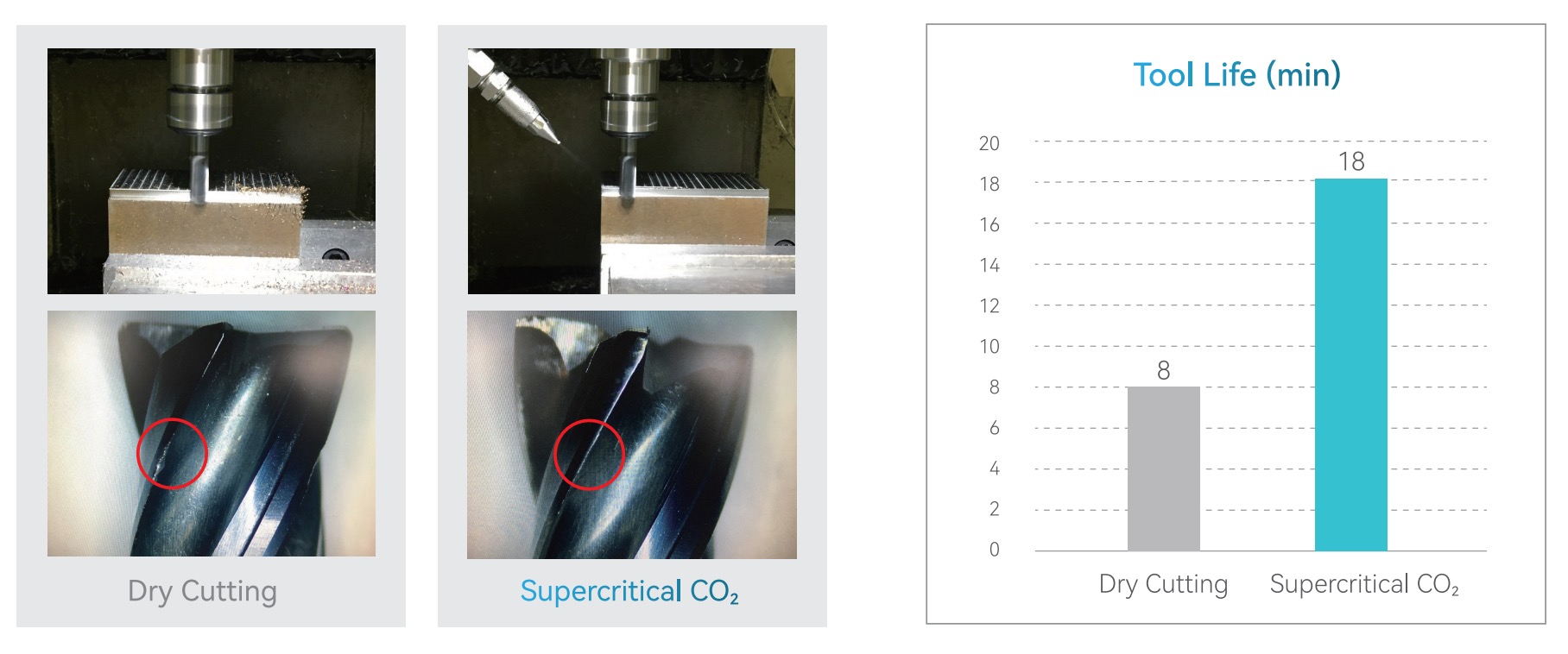
Tool Life Improvement: Machining Cr12Mo1V1 mold steel with solid carbide end mills:
Dry cutting: 8 minutes to reach VB=0.3mm flank wear.
With supercritical CO2: 18 minutes to reach same wear level.
Result: 2.25x longer tool life.
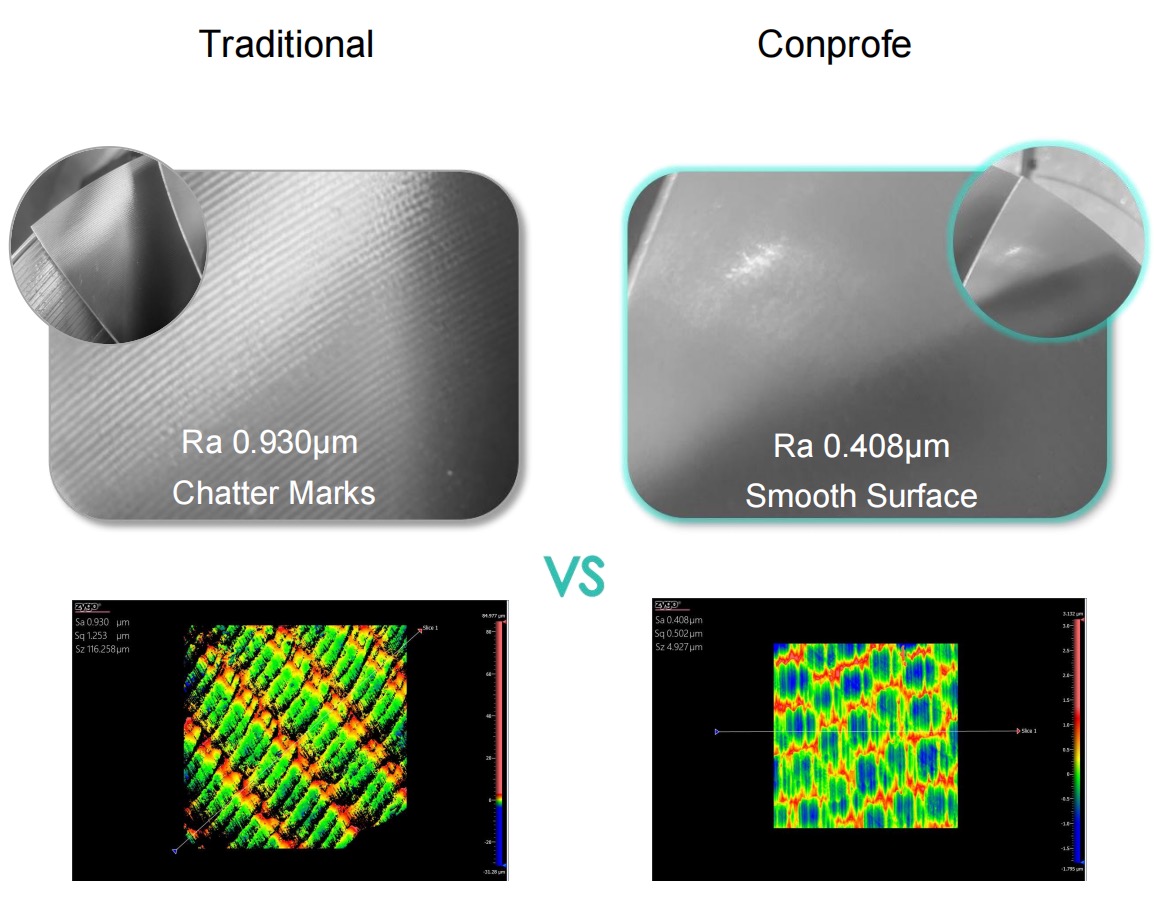
Surface Quality Enhancement: Using Ultrasonic + Supercritical CO2 + MQL on a superalloy blisk:
Blade surface roughness reduced from Ra 0.930µm to Ra 0.408µm (a 56% improvement).
Visible reduction in thin-wall cutter marks; shorter post-process polishing time.
Shop Floor Environment: No mist, no oily floors, no hazardous fumes – ready for clean workshop audits.
II. Minimum Quantity Lubrication (MQL) Technology
MQL atomizes compressed gas (air, N2, or CO2) with minimal oil into micron-sized droplets, delivering lubrication exactly where needed.
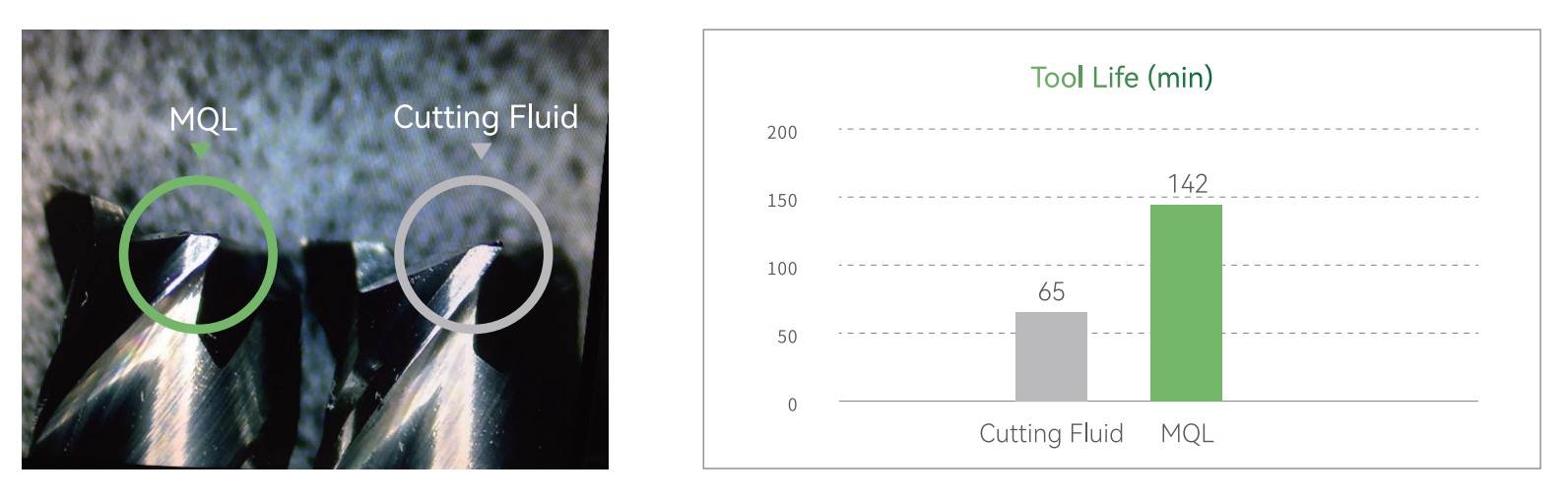
Tool Life Improvement: Machining H59 copper alloy with solid carbide end mills:
Flood coolant: 65 minutes to VB=0.2mm.
With MQL: 142 minutes to same wear level.
Result: 2.18x longer tool life.
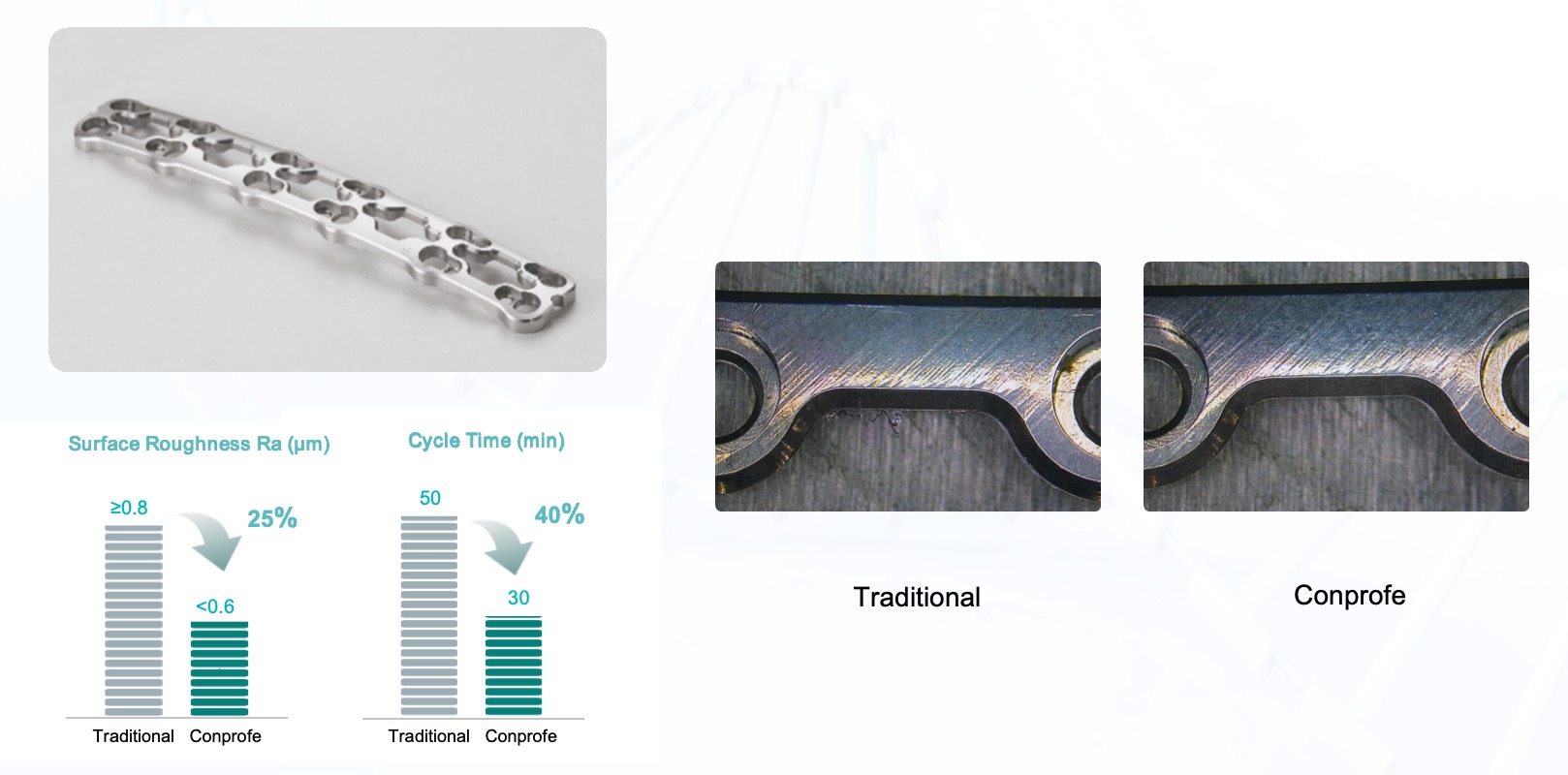
Surface & Process Efficiency: Machining a titanium alloy cervical spine plate using MQL + ultrasonic technology:
50% longer tool life.
Burr suppression so effective that manual deburring is eliminated.
Replaces conventional cutting fluids – no cleaning bath required.
III. Cryogenic Air Blasting Technology
This method delivers -10°C to -60°C cold air mixed with minimal vegetable oil to the cutting zone, reducing heat and improving lubrication without flood fluids.
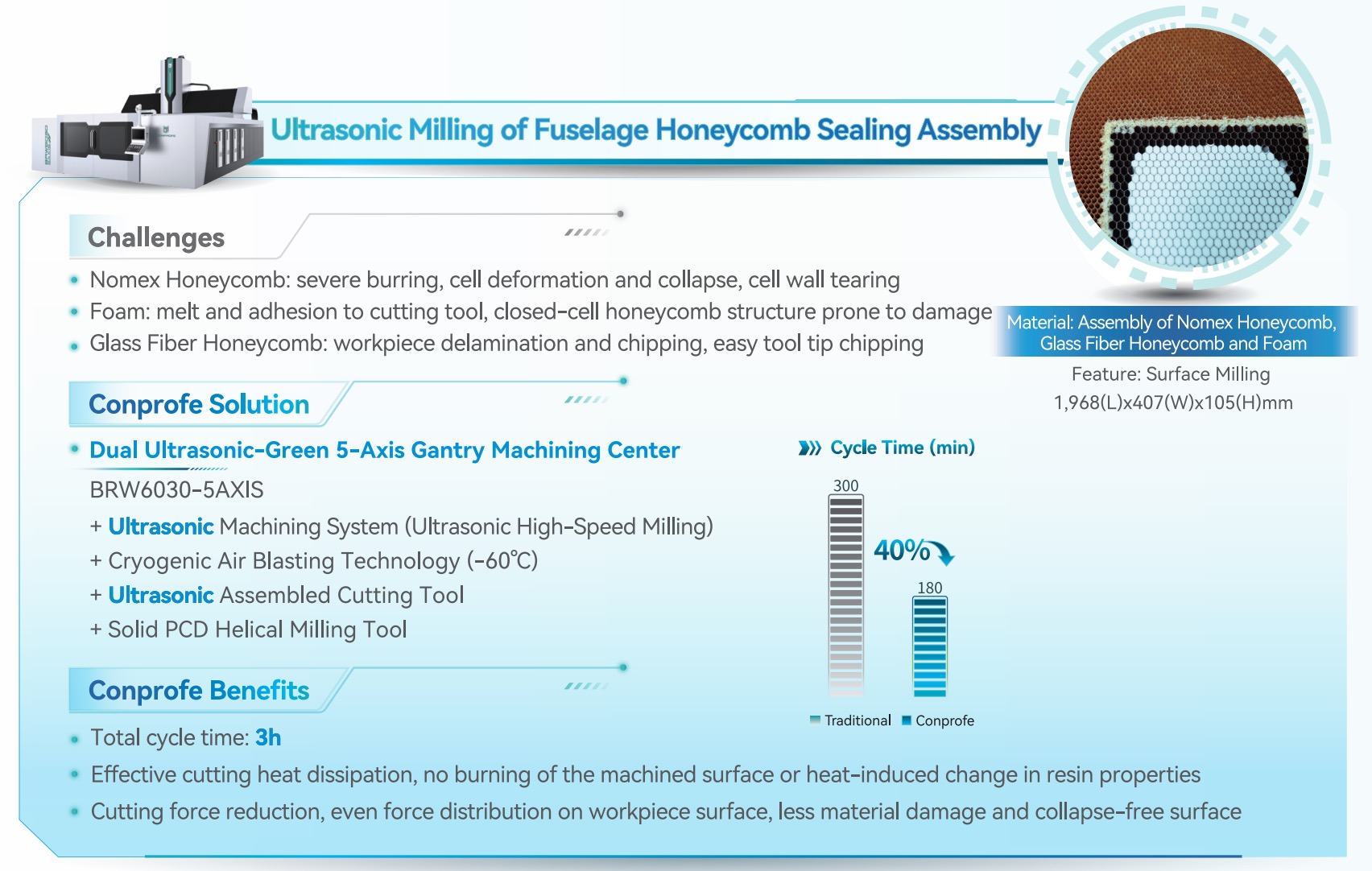
Case Study 1 – Fuselage Honeycomb Sealing Assembly (Nomex Honeycomb + Glass Fiber Honeycomb + Industrial Foam):
Cryogenic air blasting + ultrasonic technology + solid PCD helical milling tool + ultrasonic assembled cutting tool effectively removes cutting heat.
Workpiece surface: burn-free, with no risk of thermal resin modification.
Cutting forces: significantly reduced, with uniform load distribution on the contact surface.
Material damage: minimized, resulting in a flat, collapse-free surface.
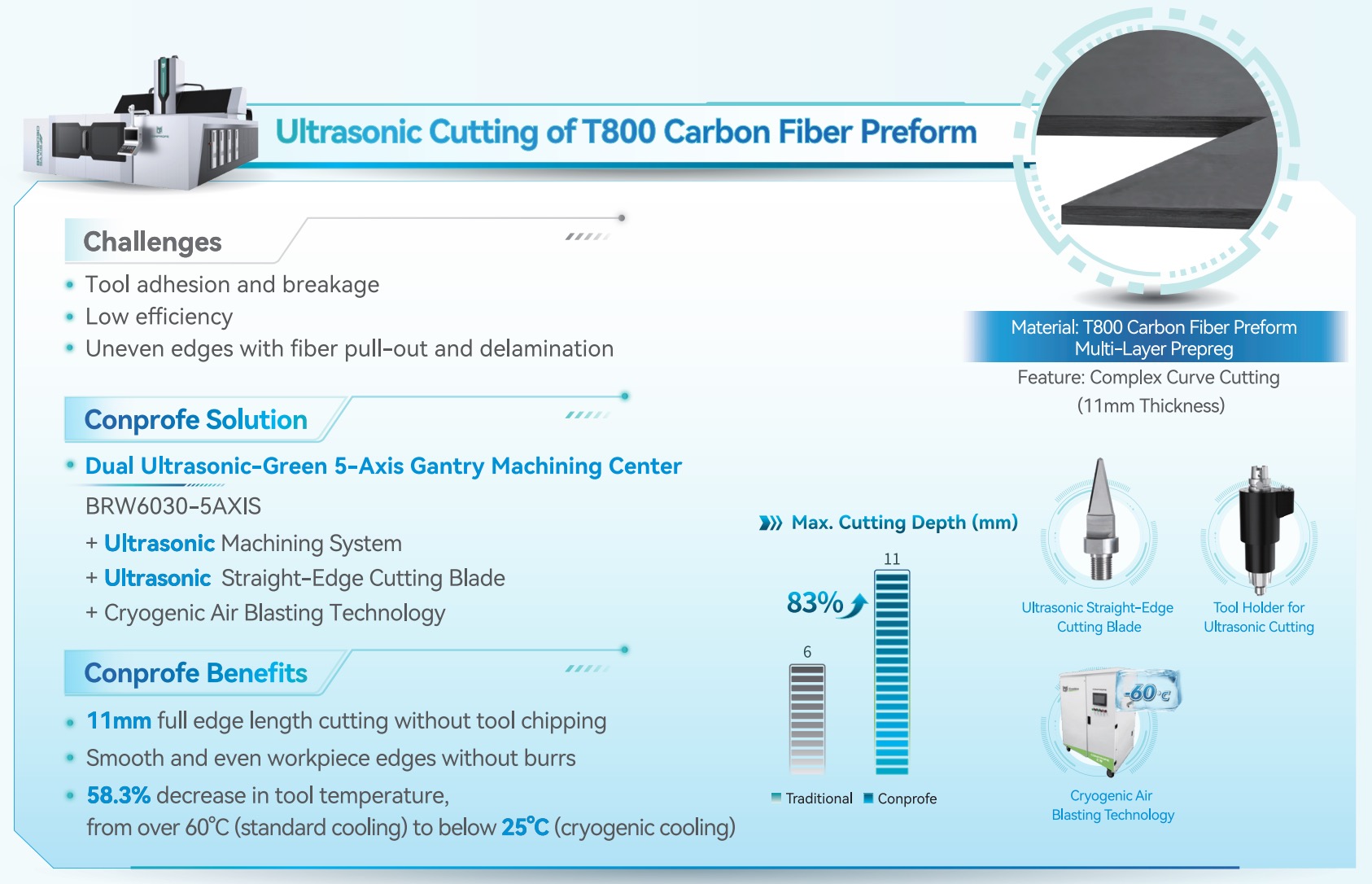
Case Study 2 – T800 Carbon Fiber Preform Cutting:
Cryogenic air blasting + ultrasonic technology + ultrasonic straight-edge cutting blade delivers clean, burr-free cut edges.
Tool temperature under cryogenic cooling: < 25°C vs tool temperature under conventional air cooling: > 60°C.
Temperature reduction: 58.3%.
The convergence of environmental regulation, worker safety expectations, and the relentless pursuit of productivity has made green machining a competitive imperative – not a compliance burden. Conprofe’s MUSCLE technology suite—encompassing MQL, Ultrasonic, ScCO2, Cryogenic Air Blasting, and LN2 Cooling—proves that eliminating cutting oils and reducing waste directly translates into longer tool life, better surface finishes, lower energy consumption, and cleaner factories.
As World Environment Day 2026 reminds us to “Beat the Clock for Climate”, manufacturers have a clear, data-backed path forward: green is not just sustainable – it is substantially more profitable. The question is no longer whether to transition, but how fast.